Silica Powder Technical Guide: pH, Oil Absorption & Moisture in Formulations
Silica Powder Technical Guide: pH, Oil Absorption & Moisture in Formulations
Silica powder is not one product. It is a family of grades whose behaviour inside a formulation is decided by a small number of technical parameters. When two suppliers quote “food grade silica powder” with apparently identical specification sheets, the two grades can still behave completely differently on the same production line — one keeps a seasoning blend free-flowing for two years, the other cakes inside the warehouse.
The three parameters that explain most of these outcomes are pH, oil absorption value (DBP), and moisture (loss on drying, LOD). This guide explains what each parameter controls, how it appears on a certificate of analysis (COA), and why a pilot trial remains the only dependable way to confirm a grade before committing to full-scale production. Examples reference three common starting points: Food Grade Precipitated Silica, Fumed Silica, and Free Flow Agent Silica.
Quick answer: pH tells you whether the grade is chemically compatible with your ingredients; oil absorption tells you how much liquid the powder can carry; LOD tells you whether the silica protects your product from moisture or adds moisture to it. All three must be verified in a pilot trial before you scale up.
Problem Definition: Why a Compliant COA Is Not Enough
Most formulation teams begin selection with two criteria: “food grade” and particle size (D50). That is a reasonable starting filter, but it does not predict performance. A COA is a statement of chemical compliance — it says the material meets a standard. It does not say the material will behave correctly in your system.
End performance is decided jointly by the raw material parameters, the formulation itself, the process, and the equipment. That is why two food-grade silica grades with similar specifications can behave very differently in the same formulation. In practice, the difference appears as:
- Colour shift or ingredient degradation — usually a pH mismatch or trace-metal interaction, not a purity failure.
- A liquid flavour or vitamin oil that will not convert to a free-flowing powder — usually a too-low oil absorption grade.
- Caking in the warehouse, or caking on arrival — usually a moisture (LOD) issue in the silica itself, in the base powder, or in packaging and transport.
Each of these is a parameter problem, and each has a technical answer.
Industry Background: The Compliance Baseline
Food-grade silicon dioxide is regulated under a shared international framework, which is why the parameter discussion below can be applied across markets. The relevant references are:
- EU: E 551, with purity criteria under Commission Regulation (EU) No 231/2012 and use provisions under Regulation (EC) No 1333/2008. In October 2024 the European Food Safety Authority re-confirmed the safety of E 551 for all populations, including infants.
- US: FDA 21 CFR 172.480 (GRAS) and the Food Chemicals Codex (FCC).
- China: GB 25576-2020 Food Additive – Silicon Dioxide, with use governed by GB 2760. The standard separates three classes by process and purity.
- International: JECFA has evaluated the acceptable daily intake (ADI) of silicon dioxide as “not specified” — the most open safety classification used for food additives.
Compliance sets the floor. It does not settle the three formulation parameters, and it does not tell you whether a supplier’s grade will run on your line.
.jpg)
Parameter 1 — pH: Compatibility With Your Ingredients
pH is the first parameter to check, because a mismatch does not just affect processability — it can degrade the active ingredients you are trying to protect.
Standard food-grade grades are formulated near neutral, typically around pH 6.5–6.8, which suits the majority of neutral powder systems. Acidic grades exist for acidic systems: a mildly acidic grade at approximately pH 2.6 is designed for those environments, and adsorbent silica used in edible-oil refining sits in a different range again (about pH 1.5–3.0) because the oil matrix itself is acidic.
Why pH matters: B vitamins and vitamin C degrade under alkaline conditions; some active pharmaceutical ingredients degrade under acidic conditions. Match the silica pH to your system pH, not to a generic preference.
Reading pH on a specification sheet is straightforward, but interpreting it requires knowing your own formulation pH. For sensitive systems — vitamins, enzymes, botanical extracts, or any product where colour drift is commercially unacceptable — run a pH compatibility trial before anything else. This is the first check that should be executed, because it is the cheapest failure to avoid.
Parameter 2 — Oil Absorption (DBP): Liquid Carrying Capacity
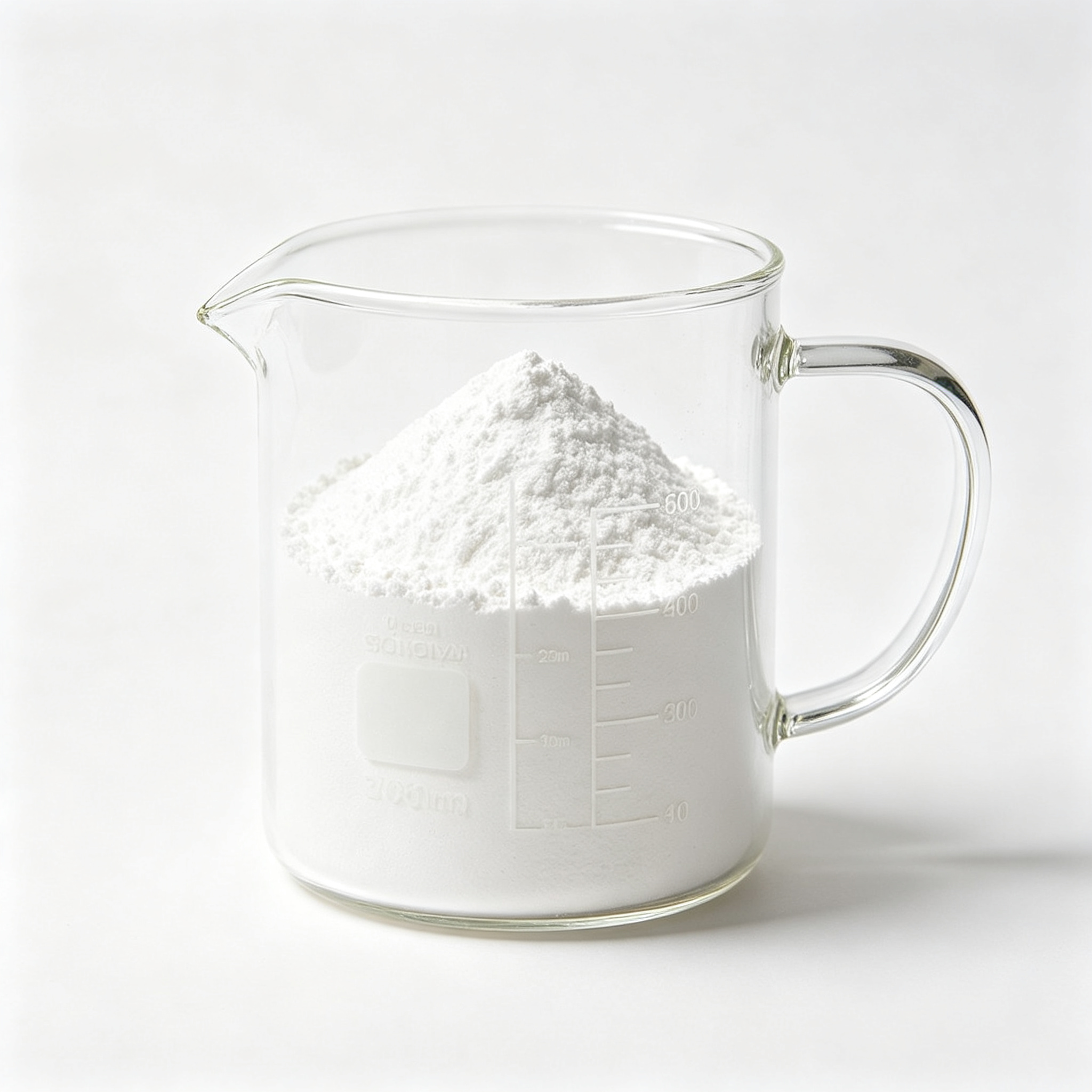
Oil absorption, usually reported as a DBP value, measures the pore capacity of the silica to take up oils and liquids. A higher value means a higher liquid loading capacity.
This single number decides whether a grade can do a carrier job at all. Porous precipitated silica works by adsorbing liquid into its internal pore structure and converting a sticky, oily or volatile liquid into a dry, free-flowing powder. If the oil absorption is too low, the pores saturate before the liquid is fully taken up, and the blend stays tacky. Failed liquid fragrance carrier applications are frequently traced back to choosing a low-oil-absorption grade rather than to any process error.
Typical reference points across grades illustrate the spread:
- Fine beverage and tableting grades can sit below 80 ml/100 g — designed for dispersion, not loading.
- General anti-caking grades typically sit in the region of 270 ml/100 g, which is enough for standard powder flow work.
- High-load carrier grades reach 250 ml/100 g and above, and food-grade adsorbent silica for liquid systems spans roughly 200–350 ml/100 g.
- Feed-grade precipitated silica for premix carriers sits in the 200–280 range.
The practical rule is simple: if the application involves a liquid that must become a powder, oil absorption is a primary selection criterion, not a secondary one. If the application only involves dry powder flow, a moderate value is sufficient and a very high value may be unnecessary cost.
Parameter 3 — Moisture (LOD) and Caking on Arrival
Loss on drying (LOD) measures the free moisture contained in the silica itself. It is measured after drying at 105 °C and is expressed as a percentage. The logic is easy to invert and easy to get wrong: if the silica arrives with high residual moisture, it adds moisture to your system instead of absorbing it, which defeats the purpose of an anti-caking agent before it has done any work.
Grades differ by intended function:
- Fumed silica is very low in moisture, typically ≤2.5%, because it is not intended to absorb water — it is used for rheology and high-clarity systems.
- High-purity precipitated grades are commonly controlled at ≤5%.
- General-purpose free flow agent grades are typically specified at ≤6.5%.
For customers in high-humidity regions, or shipping long ocean routes, a low-moisture grade is the correct priority. It is not unusual for a supplier to control LOD more tightly than the specification requires — around 4.3% against a typical competitor limit of 6% — precisely because the failure mode appears months later in a customer’s warehouse rather than at the factory gate.
What to do if the powder cakes on arrival
Caking during transport or storage is usually a moisture event, not a product defect. The common causes are high-humidity ocean freight, damaged packaging, rainy-season shipping, and warehouse water leakage. A workable sequence is:
- Photograph the condition for evidence before opening the bag further.
- Test the moisture content against the batch COA.
- If appearance and moisture are within specification, break up and sieve the material before use.
- Reject the batch if it is out of specification.
- For future orders, request moisture-proof packaging with desiccants.
Note that the base powder matters as much as the silica. If the base powder’s own LOD is high, no anti-caking agent will fully compensate. Evaluate the whole system, not one input.
Step-by-Step Breakdown: How to Evaluate a Silica Grade
- Define the benchmark parameters. Write down the target D50, oil absorption, pH and LOD for the application — not just “food grade.”
- Run parallel tests at the same dosage. Use the dosage of your current formulation so the comparison is isolated to the silica grade.
- Evaluate performance, not just the COA. Check flowability, anti-caking behaviour, colour stability and solubility/dispersibility in the finished blend.
- Run accelerated stability testing. 40 °C / 75% RH for 2–4 weeks is enough to surface most caking, colour and separation problems.
- Approve for scale-up only if performance is acceptable. Document the results and use the same batch for the pilot and the transition to production.
Why pilot trials are absolutely necessary: COA compliance does not guarantee finished-product performance. In-spec raw material parameters only mean “chemically compliant” — end performance is also affected by formulation, process and equipment. Always validate with a pilot trial when replacing imports. Skipping this step risks a full-scale production failure.
.jpg)
Use Cases: Where the Three Parameters Decide the Outcome
Spice, seasoning and salt blends
These are high-oil, high-moisture powders. Oil absorption governs how much surface oil the silica can take up, pH governs whether the silica interferes with the aroma profile, and LOD governs how long the blend stays free-flowing in humid conditions. Food-grade precipitated silica grades for spice and seasoning systems are typically specified at neutral pH with high oil absorption and LOD ≤6.5%.
Powdered beverages, milk powder and instant drink mixes
Here dispersibility and mouthfeel matter more than raw loading capacity. A grade with an overly coarse particle size produces a gritty texture; an overly fine grade risks dusting and agglomeration. Neutral pH protects sensitive vitamin content.
Liquid flavour and vitamin carriers
Oil absorption is the controlling parameter. A carrier grade with a DBP of 250 ml/100 g or higher can convert a liquid flavour, essential oil or vitamin preparation into a dry, free-flowing powder without losing it to the packaging.
Free-flow agent applications
For general food and feed powder systems, a general-purpose free flow agent grade such as a precipitated amorphous silica with D50 of 14–19 µm, neutral pH, LOD ≤6.5% and a typical dose of 0.2–1% covers most requirements economically.
Comparison Table: Precipitated, Fumed and Free Flow Agent Grades
The table below compares the three example grade families on the parameters discussed above.
| Parameter | Food Grade Precipitated Silica | Fumed Silica | Free Flow Agent Silica |
|---|---|---|---|
| Manufacturing route | Sodium silicate + acid wet precipitation, filtration, drying | Flame hydrolysis of silicon tetrachloride | Controlled wet precipitation and purification |
| CAS number | 7631-86-9 | 112945-52-5 | 7631-86-9 |
| Typical pH | 6.0–7.5 (near neutral) | 3.6–4.5 (acidic) | 6.0–7.5 (near neutral) |
| Loss on drying (LOD) | ≤5% for high-purity grades; varies by grade | ≤2.5% | ≤6.5% |
| Particle size | D50 customizable, commonly 2–50 µm | Primary particle 7–40 nm | D50 14–19 µm |
| Specific surface area (BET) | Grade dependent, e.g. 180–190 m²/g for general-purpose free flow grades | 100–400 m²/g | 180–190 m²/g |
| Typical dosage | Application dependent | Application dependent | 0.2–1% |
| Primary role in formulation | General anti-caking, flow aid, adsorption carrier | Rheology control, thickening, high-clarity systems | General-purpose anti-caking and flow aid in food and feed powders |
| Best fit when… | …the application needs value, capacity and a broad grade range | …the system needs high purity and rheology rather than liquid loading | …the need is straightforward powder flow at low addition levels |
For reference on process selection: precipitated silica offers the best value for general anti-caking, gel silica for oil adsorption, and fumed silica for thixotropy and high-clarity systems. Do not select on the word “silica” alone — select the process type that matches the application.
FAQ
1. What regulatory standards should a food-grade silica powder meet for export?
A food-grade silica powder intended for international markets should be traceable to a defined standard set. The core references are GB 25576-2020 and GB 2760 in China, E 551 with Commission Regulation (EU) No 231/2012 and Regulation (EC) No 1333/2008 in the EU, and FDA 21 CFR 172.480 (GRAS) plus the Food Chemicals Codex in the US. JECFA has evaluated the ADI as “not specified.” Beyond product standards, system certification matters for buyer audits: ISO 9001:2015, ISO 22000:2018, FSSC 22000, and for feed applications FAMI-QS, with Kosher, Halal and HACCP available. Each shipment should be accompanied by a batch COA covering the key parameters and heavy metals.
2. Why does pH matter for formulations?
Because a pH mismatch can degrade the sensitive ingredients the silica is supposed to protect. Standard grades are near neutral, typically pH 6.5–6.8, while dedicated acidic grades around pH 2.6 exist for acidic systems. B vitamins and vitamin C degrade under alkaline conditions and some APIs degrade under acidic conditions, so pH must be matched to the system rather than chosen generically. For any sensitive formulation, run a pH compatibility trial first.
3. Why is oil absorption value important?
Oil absorption, reported as a DBP value, measures the pore capacity of a grade to take up oils and liquids — higher value means higher liquid loading capacity. If the value is too low, the pores saturate before the liquid is fully absorbed and the blend stays tacky. Failed liquid fragrance carrier applications are often caused by choosing a low-oil-absorption grade rather than by a process problem. If the application involves converting a liquid into a powder, treat oil absorption as a primary selection criterion.
4. Why is lower moisture (LOD) better — and what if the powder cakes on arrival?
LOD measures free moisture inside the silica itself. If the value is high, the silica adds moisture to the formulation instead of absorbing it, which defeats the anti-caking function. Customers in high-humidity regions or shipping long ocean routes should prioritise low-moisture grades. If a shipment arrives caked, it is usually a transport or storage moisture event rather than a defect: photograph the condition, test moisture against the COA, break up and sieve if within specification, reject if out of specification, and request moisture-proof packaging with desiccants for future orders.
5. Why are pilot trials absolutely necessary when selecting a manufacturer?
Because COA compliance does not guarantee finished-product performance. In-spec raw material parameters only mean “chemically compliant” — end performance is also affected by the formulation, the process and the equipment, so two grades with similar specifications can perform very differently in the same formulation. A structured pilot trial at 1–25 kg, using the same batch as production, benchmarking D50, oil absorption, pH and LOD, then running accelerated stability at 40 °C / 75% RH for 2–4 weeks, is the reliable way to confirm a grade. Skipping this step risks full-scale production failure.
Next Step: Request a Sample and Run Your Own Trial
Shandong Zhonglian Chemical Co., Ltd., the overseas sales arm of Zhongqi (Guangdong) Silicon Materials (stock code 880747), produces food-grade silica powder from a GMP-compliant base in Guangdong, China, across the ZLSIL, ZLCSIL and ZOILSIL series. Free samples are provided with COA and certificates so you can benchmark pH, oil absorption and LOD against your current grade before committing to bulk.
You can reach the technical team through www.silicaplant.com, request a sample and quote by email at levin@silicaplant.com, or download the full Food Grade Silica brochure.
Conclusion
When selecting silica powder for a formulation, the specification sheet is a starting point rather than an answer. Three parameters do most of the work. pH determines ingredient compatibility and protects sensitive actives. Oil absorption determines how much liquid a grade can carry, and therefore whether a carrier application will succeed. Moisture (LOD) determines whether the silica protects the blend from moisture or contributes to caking, in the warehouse and after ocean freight.
Compliance — GB 25576-2020, E 551, FDA 21 CFR 172.480, FCC, and JECFA “not specified” ADI — is the floor. Performance is confirmed on the line. Define your benchmark parameters, run parallel tests at the same dosage, evaluate flowability, anti-caking, colour and solubility, then complete accelerated stability testing before scale-up. That sequence turns a supplier quotation into a validated raw material decision.
Product parameters referenced in this guide, including pH ranges, loss on drying and particle size distributions, are typical grade values and are subject to the actual batch and the selected applicable standard. Confirm final specification against your batch COA and your target market regulations.
Have Questions or Need More Details?
Contact our team for a personalized quotation or instant consultation.
Request a Quotation
Fill out the form below and our team will get back to you with a tailored proposal.
WhatsApp Direct Chat
Prefer to chat in real-time? Message us on WhatsApp for instant assistance & quick answers.
- Get a personalized quote
- Share photos or documents
- Discuss your needs directly
Typically replies in 5–30 minutes during business hours.