
Precipitated vs Fumed Silica for Anti-Caking: A Buyer's Comparison
Choosing an anti-caking silica is rarely about which silica is best. It is about which silica fits your powder, your process, your market regulations and your budget. For food powders, that decision usually narrows to two families: precipitated silica — the material most often supplied as E551 food-grade silica — and fumed silica. Both are amorphous silicon dioxide. Both can keep a powder free-flowing. But they are manufactured differently, behave differently, and are not interchangeable on every production line.
This guide breaks the comparison into the variables that actually matter in a buyer's evaluation — flow performance, oil absorption, pH and moisture — and explains when an E551 food-grade precipitated silica is the simpler choice and when fumed silica may be worth its premium.
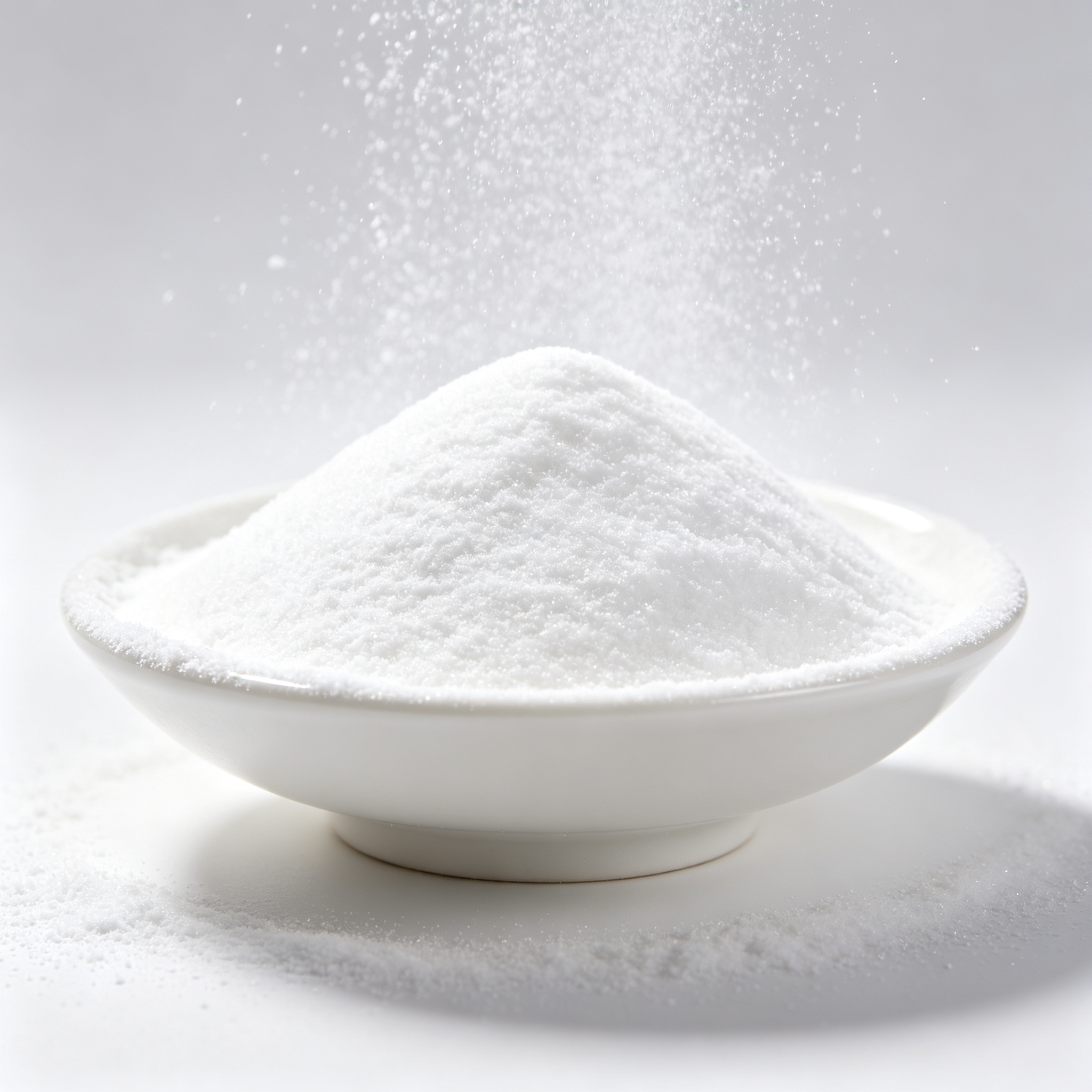
Food-grade silica powder supplied for anti-caking, flow aid and carrier use in powder systems.
Why Food Powders Cake — And Why the Choice of Silica Matters
Caking is not one failure mode. It is the combined result of several physical forces acting on particles that are meant to stay separate:
- Liquid bridging. Surface moisture dissolves soluble components at particle contact points; as the bridges dry, they crystallise and lock particles together.
- Van der Waals attraction. Fine particles in close contact attract one another even without moisture.
- Fat and oil bridging. In high-fat powders such as non-dairy creamer or flavour premixes, free oil can form non-aqueous bridges.
- Static charge. Electrostatic attraction pulls fine particles into clusters that resist flow.
- Thermoplastic deformation. Some powders soften or sinter during storage and transport at elevated temperature.
An anti-caking agent works physically, not chemically. Its porous structure absorbs free water and oils, its fine particles coat and separate the base powder, and its surface helps dissipate static. Because the mechanism is physical, the grade you pick must match the particle size, moisture and fat content of the powder you are protecting — which is exactly where precipitated and fumed silica begin to diverge.
Precipitated vs Fumed Silica: Two Routes, Two Behaviours
The difference between the two families starts in the reactor, not in the formulation.
Precipitated silica is produced by reacting sodium silicate with an acid under controlled conditions. The resulting particles aggregate into a porous, highly adsorptive structure that is well suited to carrying liquids and interrupting moisture bridges. It is a wet-process, high-volume material, which is why most food-grade anti-caking silica supplied commercially as E551 is precipitated silica.
Fumed silica is produced by flame hydrolysis of silicon tetrachloride at high temperature. Its primary particles are nanoscale (7–40 nm in the Zhonglian ZLCSIL fumed series), which gives it very high surface area, high purity (SiO₂ ≥99.8%) and strong thickening and thixotropic behaviour. It is more expensive per kilogram and is usually reserved for applications that genuinely need its properties — low dust, clear or transparent systems, or rheology modification alongside anti-caking.

Silica powder is a physical anti-caking agent: performance depends on pore structure, particle size and moisture.
The Four Variables That Decide Your Choice
1. Flow performance
Anti-caking performance is driven mainly by specific surface area (BET), oil absorption and particle size distribution, not by brand name. A finer, higher-BET grade disperses more thoroughly between particles and interrupts more contact points; a coarser grade flows more freely but may be less effective in very fine, cohesive powders.
Particle size has a second consequence. Too coarse and the silica can contribute a gritty feel; too fine and it risks dusting and agglomeration during blending. In practice, a mid-range D50 solves most food powder problems: Zhonglian's Free Flow Agent Silica grade, for example, is specified at D50 14–19 µm with BET 180–190 m²/g and a general-purpose dose of 0.2–1%.
2. Oil absorption
Oil absorption (the DBP value) measures how much liquid a grade can take up. It matters most in two situations: high-fat powders where free oil needs to be bound, and carrier applications where liquid flavours, oils or vitamins are loaded onto the silica.
Precipitated grades cover a wide absorption range, from general-purpose flow aids to high-oil-absorption carriers. Fumed silica is generally selected for purity, low dust and rheology rather than for raw liquid capacity, so for liquid-loading jobs the precipitated family is usually the more direct fit.
3. pH
pH is the variable most often overlooked at the sampling stage and most often blamed at the complaint stage. Standard precipitated food grades sit in a near-neutral band (typically pH 6.0–7.5). Fumed silica is more acidic: the ZLCSIL fumed series is specified at pH 3.6–4.5.
That gap matters when the finished formula contains acid-sensitive or alkali-sensitive actives — certain vitamins, enzymes and APIs degrade when the local pH drifts. If your powder is neutral, a near-neutral precipitated grade is the lower-risk starting point. If your system is deliberately acidic, a pH-matched grade avoids an avoidable compatibility problem. A pH compatibility trial is the fastest way to confirm the match before scale-up.
4. Moisture (loss on drying)
Residual moisture in the silica itself can work against the goal. Loss on Drying (LOD) measures free moisture in the product; a high LOD means the silica is adding moisture to the system rather than absorbing it, which undermines its anti-caking purpose.
Food-grade precipitated grades are typically specified at LOD ≤5–6.5% depending on the model, and actual controlled values can sit noticeably below that ceiling. Fumed silica is much drier by nature, with LOD specified at ≤2.5% in the ZLCSIL series. For customers in high-humidity regions or shipping by long ocean freight, the moisture headroom is a genuine selection criterion, not a formality — and it should be read alongside the packaging specification, not in isolation.
When E551 Food-Grade Precipitated Silica Is the Simpler Choice
For the majority of food powder anti-caking jobs, precipitated silica is the simpler answer, for four reasons:
- Regulatory familiarity. E551 is the EU food additive number for silicon dioxide, and the purity criteria in Commission Regulation (EU) No 231/2012 are the reference most buyers already work to. In the US, FDA 21 CFR 172.480 lists silicon dioxide as GRAS; in China, GB 25576-2020 defines the food additive. These are the frameworks a compliance team is already set up to check.
- Cost at volume. Precipitated silica is produced at high tonnage by wet precipitation. Fumed silica is produced by flame hydrolysis and priced higher. For a general anti-caking or flow-aid job, the extra cost of fumed is not usually recovered in performance.
- Broad application coverage. A single well-chosen precipitated grade often covers salt, seasonings, instant drinks and feed premixes. Zhonglian's Free Flow Agent Silica grade is specified for exactly that spread: food powders, seasonings, instant drinks, chemical powders and feed premixes.
- Supply continuity. Precipitated capacity is large and widely distributed, which reduces the risk of a single-line disruption.
Zhonglian Food Silica, operated by Shandong Zhonglian Chemical Co., Ltd., maintains food-grade precipitated grades — including Free Flow Agent Silica, Food Grade Precipitated Silica and higher-purity options — that are designed for this general-purpose role.
When Fumed Silica May Be Preferred
Fumed silica earns its place in specific scenarios rather than as a default:
- Low-dust handling. Its very fine, high-surface-area structure and low moisture make it attractive where a plant is trying to reduce airborne dust during charging.
- Clear or transparent systems. Fumed silica is used where optical clarity matters, including clear gels and certain transparent formulations.
- Rheology plus anti-caking. When the buyer wants thickening or thixotropic control in the same additive, fumed silica delivers both functions.
- High-purity requirements. At SiO₂ ≥99.8%, fumed grades appeal to applications with tight purity ceilings.
Zhonglian's Food Grade Fumed Silica line (ZLXIDE-P200, P300, P380, P972) is offered with the same regulatory coverage as the precipitated food grades — GB 25576-2020, FDA 21 CFR 172.480, EU E551 purity criteria and JECFA — so a switch is a formulation decision, not a compliance rewrite.
A Step-by-Step Buyer's Breakdown
- Characterise the base powder. Record particle size distribution, surface moisture and fat/oil content. These three numbers narrow the choice faster than any brochure.
- Decide the function. Is the job purely anti-caking and free flow, or does it also need liquid carrying, or rheology control? Pure anti-caking points to precipitated; multi-function points to comparing fumed.
- Set the pH window. Confirm the pH range the formula tolerates, then choose a grade whose slurry pH sits inside it. Standard precipitated grades are near-neutral; fumed is acidic.
- Read the moisture headroom. Compare LOD specifications against your storage and shipping conditions. Long ocean freight in a humid season argues for extra headroom and moisture-barrier packaging.
- Run a dosage gradient. Start at the low end of the supplier-recommended range and increase in steps until flow is stable, staying strictly within the maximum use level for your food category in GB 2760 or the equivalent regulation for your market.
- Run a pilot trial. COA compliance does not guarantee finished-product performance. Two grades with similar specifications can behave very differently in the same formula. Validate with a pilot batch at the intended dosage, then confirm with accelerated storage testing before committing to full-scale production.
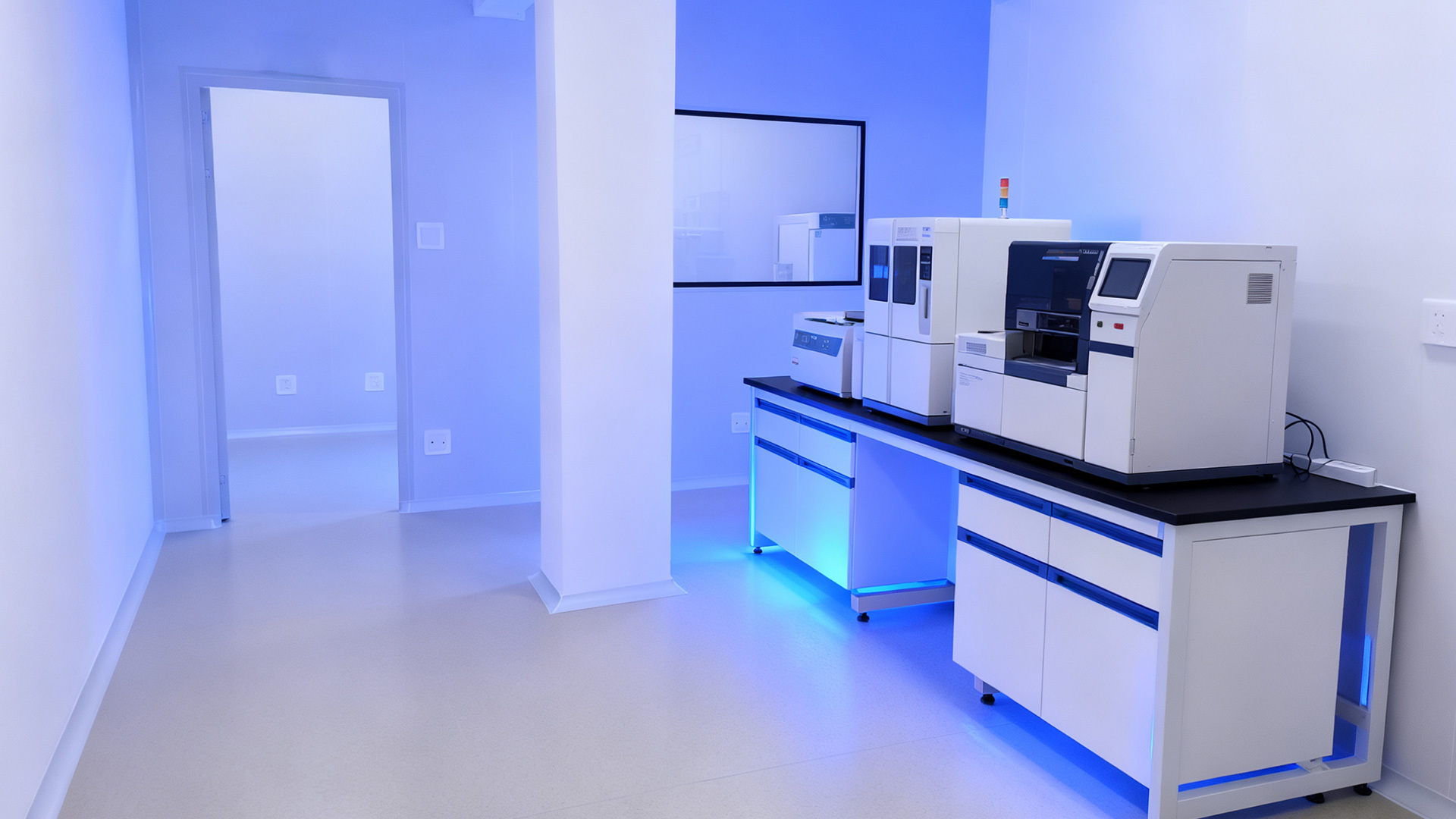
Microbiology testing laboratory: microbial parameters are a routine release criterion for food-grade silica.
Use Cases in Food Powders
Application experience usually guides the buy decision more than a specification sheet. Common patterns include:
- Seasonings and spices. Powders such as chili, pepper, curry and compound seasonings are both oily and hygroscopic. Grades with high oil absorption and pH in the 5.5–7.5 range are typically used; Zhonglian's Silica for Spices & Seasonings line is specified at D50 50 µm, BET 200 m²/g, pH 5.5–7.5 and LOD ≤6.5%.
- Salt and salt substitutes. Coarse salt particles flow easily on their own but cake under humid conditions. A finer, low-dose grade works well; the Zhonglian Silica for Salt grade is specified at 325 mesh, D50 ≈44 µm, BET 170 m²/g and typical dose 0.5–1%.
- Non-dairy creamer and instant drinks. High fat content and fine particle size make these powders prone to both caking and dusting. Grades with high oil absorption are used; the Silica for Non-dairy Creamer line is specified at D50 40–60 µm, BET 230±20 m²/g, pH 6.0–7.5 and LOD ≤6.5%.
- Flavours and carriers. Where liquid flavours or oils need to be turned into a free-flowing powder, oil absorption and particle size become the primary selection criteria, and a gradient trial is the fastest way to find the loading that stays free-flowing.
- Premium food and high-purity work. When purity ceilings are tight, the precipitation route still offers high-purity options: Zhonglian's High Purity Precipitated Silica is specified at SiO₂ ≥99.5%, D50 10–20 µm, BET 150–300 m²/g, pH 6.0–7.5 and LOD ≤5%.
Comparison Table: Precipitated vs Fumed Silica for Anti-Caking
The table below summarises the comparison at the specification level, using Zhonglian's ZLSIL precipitated and ZLCSIL fumed food-grade series as the reference points.
| Dimension | Precipitated Silica (ZLSIL) | Fumed Silica (ZLCSIL) |
|---|---|---|
| Manufacturing route | Sodium silicate plus acid precipitation (wet process) | Flame hydrolysis of silicon tetrachloride |
| CAS reference | 7631-86-9 | 112945-52-5 |
| Primary particle | Micron scale, tunable D50 | 7–40 nm |
| BET surface area | ~170–300 m²/g depending on grade | 100–400 m²/g |
| SiO₂ content | ≥99% (high-purity grades to ≥99.5%) | ≥99.8% |
| pH (slurry) | 6.0–7.5 (near-neutral) | 3.6–4.5 (acidic) |
| Loss on drying | ≤5–6.5% (grade-dependent) | ≤2.5% |
| Typical anti-caking dose (reference grade) | 0.2–1% (Free Flow Agent Silica) | Confirm by pilot trial for the specific system |
| Regulatory coverage | GB 25576-2020, FDA 21 CFR 172.480, EU E551, JECFA | Same coverage available on the food-grade line |
| Cost profile | Cost-effective at volume | Higher cost per kilogram |
| Best fit | General food powder anti-caking, flow aid, carrier | Low-dust handling, clear systems, rheology plus anti-caking |
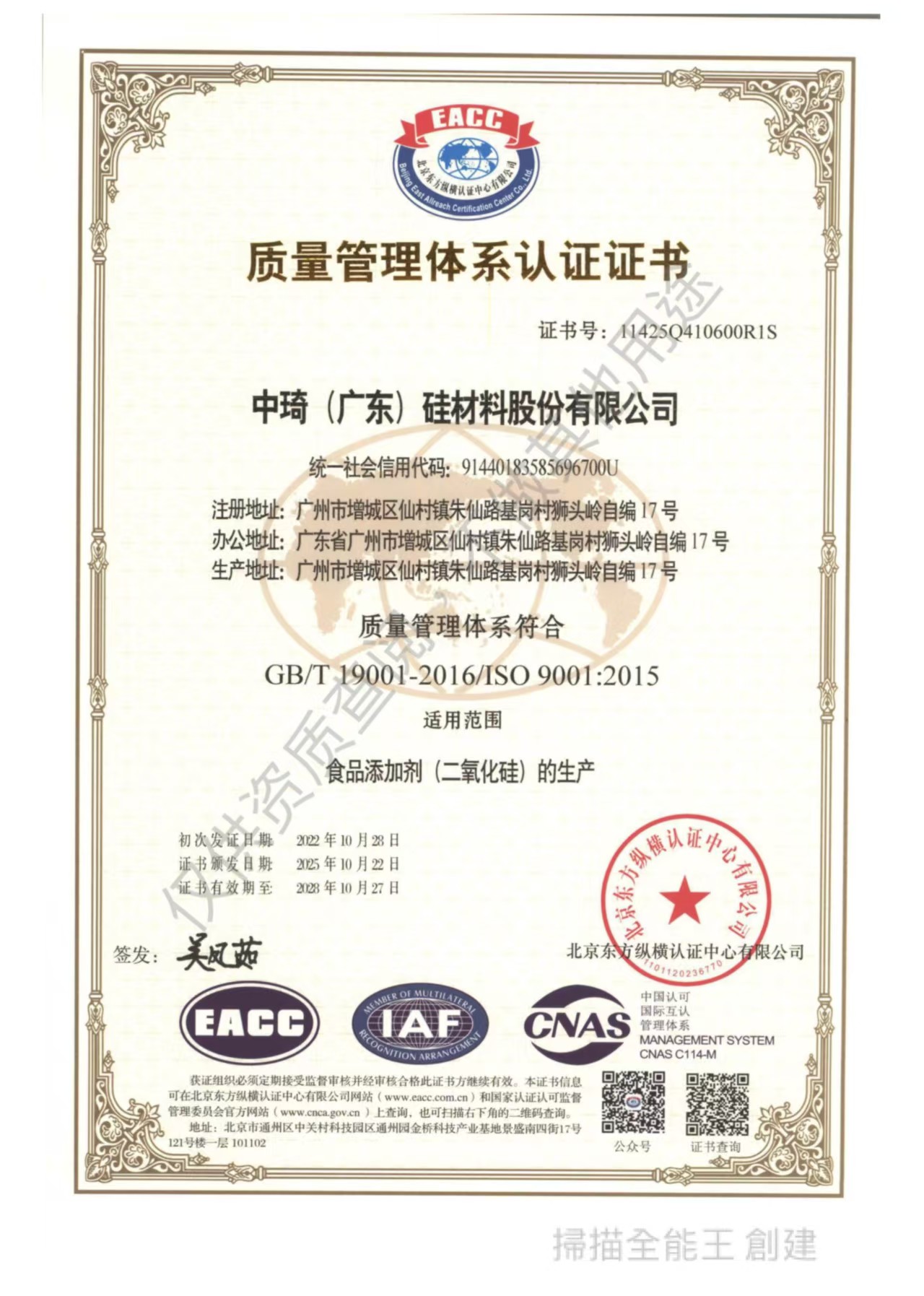
ISO 9001 and related system certifications support batch-to-batch consistency for food-grade silica.
Market Context: Why This Choice Is Getting More Attention
The commercial backdrop matters for buyers setting budgets and supply plans. The global food-grade silica market was valued at approximately USD 0.87 billion in 2025 according to Fortune Business Insights, while the broader precipitated silica market reached roughly 3.25 million tons in volume in the same year, per Mordor Intelligence. Note that published food-grade silica valuations vary widely by definition — some estimates run considerably higher depending on whether pharmaceutical, feed and industrial grades are included — so any single figure should be treated as indicative rather than definitive.
On the regulatory side, the EFSA re-evaluation published in October 2024 concluded that E551 silicon dioxide is safe for all populations assessed, including infants. That conclusion keeps the additive firmly available across EU markets and reduces the risk that a compliant formula has to be reformulated for regulatory reasons — which in turn keeps the decision focused on performance and cost rather than on availability.
Anti-caking grades are a subset of a broader silica portfolio; buyers should confirm grade fit, not just category.
Frequently Asked Questions
Is E551 the same as precipitated silica?
E551 is the EU food additive number for silicon dioxide, covering synthetic amorphous silica that meets the purity criteria in Commission Regulation (EU) No 231/2012 and the use provisions in Regulation (EC) No 1333/2008. In commercial food supply, most E551 material sold for anti-caking is precipitated silica, but the number describes the substance and its purity, not the manufacturing route. Fumed silica can also be manufactured to meet E551 purity criteria, and Zhonglian's Food Grade Fumed Silica line carries the same regulatory coverage as its precipitated line. On your finished-product label the ingredient still reads silicon dioxide (E551).
How do I decide between precipitated and fumed silica for my powder?
Start with three characteristics of the base powder: particle size distribution, surface moisture and fat or oil content. A mid-range precipitated grade — for example D50 14–19 µm, BET 180–190 m²/g, pH 6.0–7.5, dose 0.2–1% — covers most general anti-caking and free-flow needs. Consider fumed silica when the application specifically requires lower dust, higher purity (SiO₂ ≥99.8%), or rheology control in addition to anti-caking. If the base powder is a clear or transparent system, fumed is worth evaluating; if it is an opaque food powder, precipitated is usually the simpler and more economical starting point.
Will the pH of the silica affect my formulation?
It can. Standard precipitated food grades sit in a near-neutral band of roughly pH 6.0–7.5, while the fumed ZLCSIL series is specified at pH 3.6–4.5. If your formula contains pH-sensitive actives — certain vitamins, enzymes or APIs — matching the silica pH to the system avoids an avoidable compatibility problem. Running a short pH compatibility trial before scale-up is the most reliable way to confirm the match.
Which option costs less?
At equivalent functional performance, precipitated silica is generally the more cost-effective option for volume food anti-caking, because it is produced by a wet precipitation process at high tonnage. Fumed silica is manufactured by flame hydrolysis and is priced higher per kilogram. For most food powder lines, a precipitated E551 grade delivers the required flow and anti-caking performance at a lower unit cost. Fumed silica is chosen when the application genuinely needs its specific properties and the buyer can justify the premium on performance grounds rather than on habit.
Can I test both grades before committing to a supply contract?
Yes. Zhonglian Food Silica supplies free samples for side-by-side evaluation. The recommended approach is to run a pilot batch at the same dosage as your current grade, then compare flowability, anti-caking performance, colour and dispersion, and confirm the result with accelerated storage testing before scaling. COA compliance does not guarantee finished-product performance, so a pilot trial is the step that converts a data sheet into a decision.
What are the MOQ and lead time?
The standard minimum order quantity is 1 ton, and standard lead time is 7–10 days for stocked goods, though the actual lead time depends on the specific product, quantity, inventory and destination. Monthly production capacity is 3,000 tons. The company exports to more than 20 countries and regions, including Europe, the Americas, Japan, South Korea, Southeast Asia and the Middle East.
Conclusion
Precipitated and fumed silica both work as anti-caking agents, but they solve the problem differently and suit different buying situations. Precipitated silica — the material most commonly supplied as E551 — is the simpler, more economical choice for the majority of food powder anti-caking, free-flow and carrier applications. Its near-neutral pH, tunable particle size, wide oil absorption range and high-volume supply make it the natural first call. Fumed silica is a specialist option: choose it when low dust, high purity or combined rheology control genuinely matter to the finished product.
The right way to decide is not to read more specifications but to test two or three candidates against your own powder. Characterise the base powder, match the pH, read the moisture headroom, run a dosage gradient within your regulatory limits, and confirm with a pilot trial. That sequence turns a comparison article into a validated formulation decision.
Request a Sample and Compare Both Grades
Zhonglian Food Silica supplies food-grade precipitated and fumed silica for anti-caking, free flow and carrier applications, with broad grade coverage under GB 25576-2020, FDA 21 CFR 172.480, EU E551 and JECFA. Free samples are available for side-by-side pilot trials.
Download the full product brochure: Food Grade Silica Brochure
Technical enquiries and sample requests: levin@silicaplant.com | Website: www.silicaplant.com
Have Questions or Need More Details?
Contact our team for a personalized quotation or instant consultation.
Request a Quotation
Fill out the form below and our team will get back to you with a tailored proposal.
WhatsApp Direct Chat
Prefer to chat in real-time? Message us on WhatsApp for instant assistance & quick answers.
- Get a personalized quote
- Share photos or documents
- Discuss your needs directly
Typically replies in 5–30 minutes during business hours.