China E551 Food Grade Silica Powder Manufacturers: A Compliance-First Buyer's Guide
Sourcing E551 food grade silica powder from China is no longer a question of finding the cheapest quote. It is a question of finding a manufacturer whose certifications, impurity limits, and batch documentation survive your own regulatory review — and your customers' audits. For buyers in the research and evaluation stage, this guide lays out what a credible Chinese E551 silica supplier must actually prove, which parameters drive selection, and where the genuine decision risks sit.
What E551 Food Grade Silica Actually Is
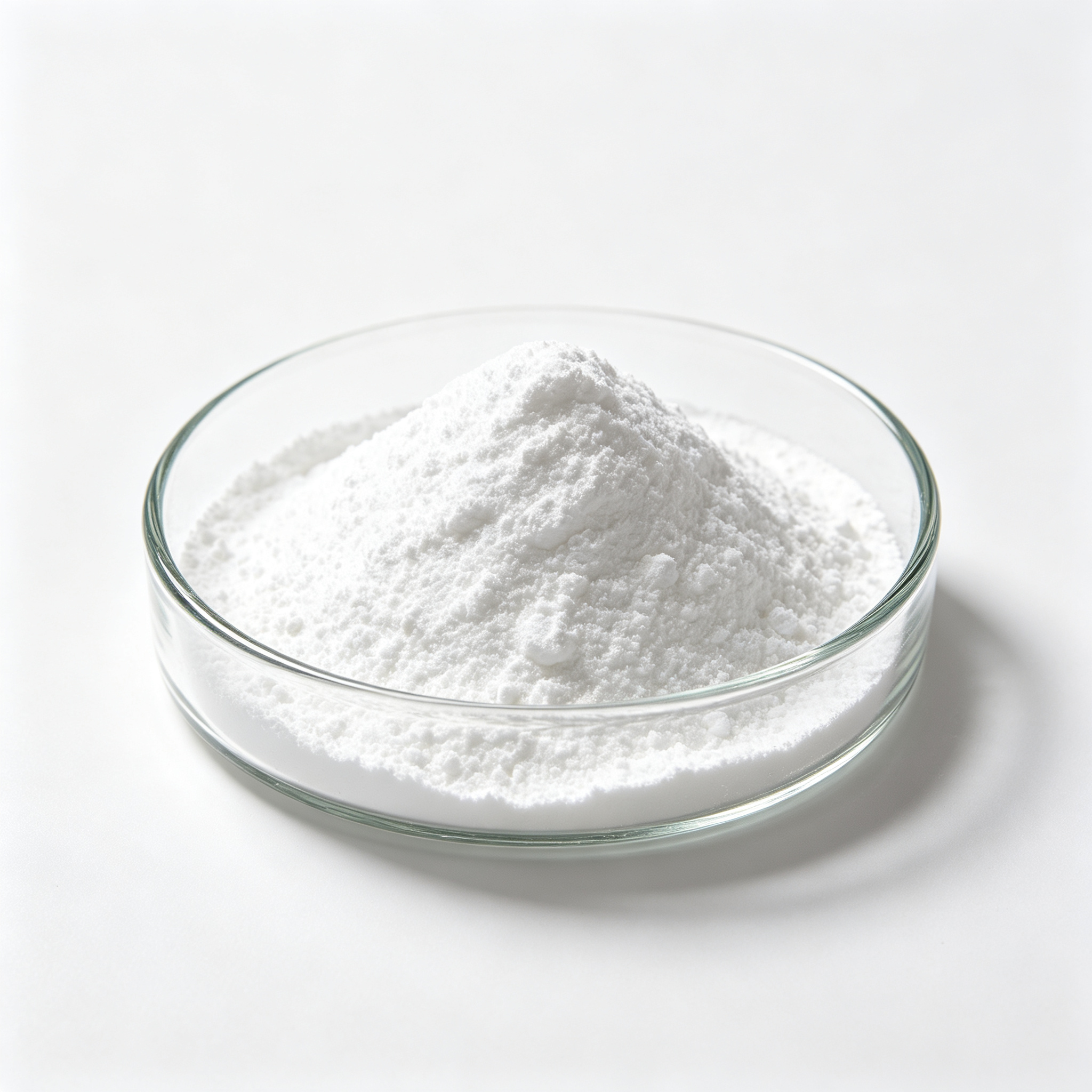
E551 is the European food additive number for silicon dioxide — an amorphous, synthetic, inorganic powder used as an anti-caking agent, flow aid and adsorption carrier. Its chemical registration number is CAS 7631-86-9. The structural configuration is amorphous silicon dioxide, which is the critical distinction: crystalline silica (quartz, sand) carries respiratory hazards that amorphous silica does not.
From a formulation standpoint, food grade silica performs four functions that buyers consistently ask about:
- Anti-caking: the porous structure absorbs free moisture and physically separates particles, blocking the liquid bridges that cause caking.
- Flow aid: improves pourability in salt, bouillon, spice blends and powdered beverages.
- Carrier: converts liquid flavors, essential oils and vitamins into free-flowing powders.
- Adsorbent: removes phospholipids, soap residues and trace metals in edible oil refining and beer filtration.
In practice, the term "silica powder" covers a very wide quality spectrum. General-purpose industrial grades can sit as low as SiO₂ ≥96%. Premium food additive silica grades targeted at regulated markets typically run SiO₂ ≥99%, with heavy metals controlled far below compendial ceilings.
Market Context: Why China Is a Primary Source for E551 Silica
The global food grade silica market was valued at approximately USD 0.87 billion in 2025, according to Fortune Business Insights. Global precipitated silica market volume reached roughly 3.25 million tons in 2025 (Mordor Intelligence). Toothpaste-grade silica alone is forecast at USD 441 million in 2025 (QYResearch).
Two regulatory events reinforced demand for compliant E551 material. First, EFSA re-evaluated E551 and confirmed safety for all populations, including infants under 16 months, in its October 2024 opinion under Regulation (EU) No 231/2012. Second, buyers in the US and EU increasingly require full Certificate of Analysis documentation with microbial panels, heavy-metal testing and lot traceability — not just a certificate of compliance.
China's advantage in this segment is not purely cost. It is the density of manufacturing capability in a narrow band of suppliers that have invested in GMP-certified dust-free workshops, dedicated food-grade lines and multi-market certification portfolios. The question for buyers is how to identify them.
The Compliance Stack: Certifications a Credible China E551 Supplier Must Hold
Certification is the first filter and the most common point of failure. A supplier that cannot produce current, verifiable certificates is a supplier you cannot approve internally regardless of price. At minimum, a serious China E551 food grade silica manufacturer should hold the following.
System Certifications
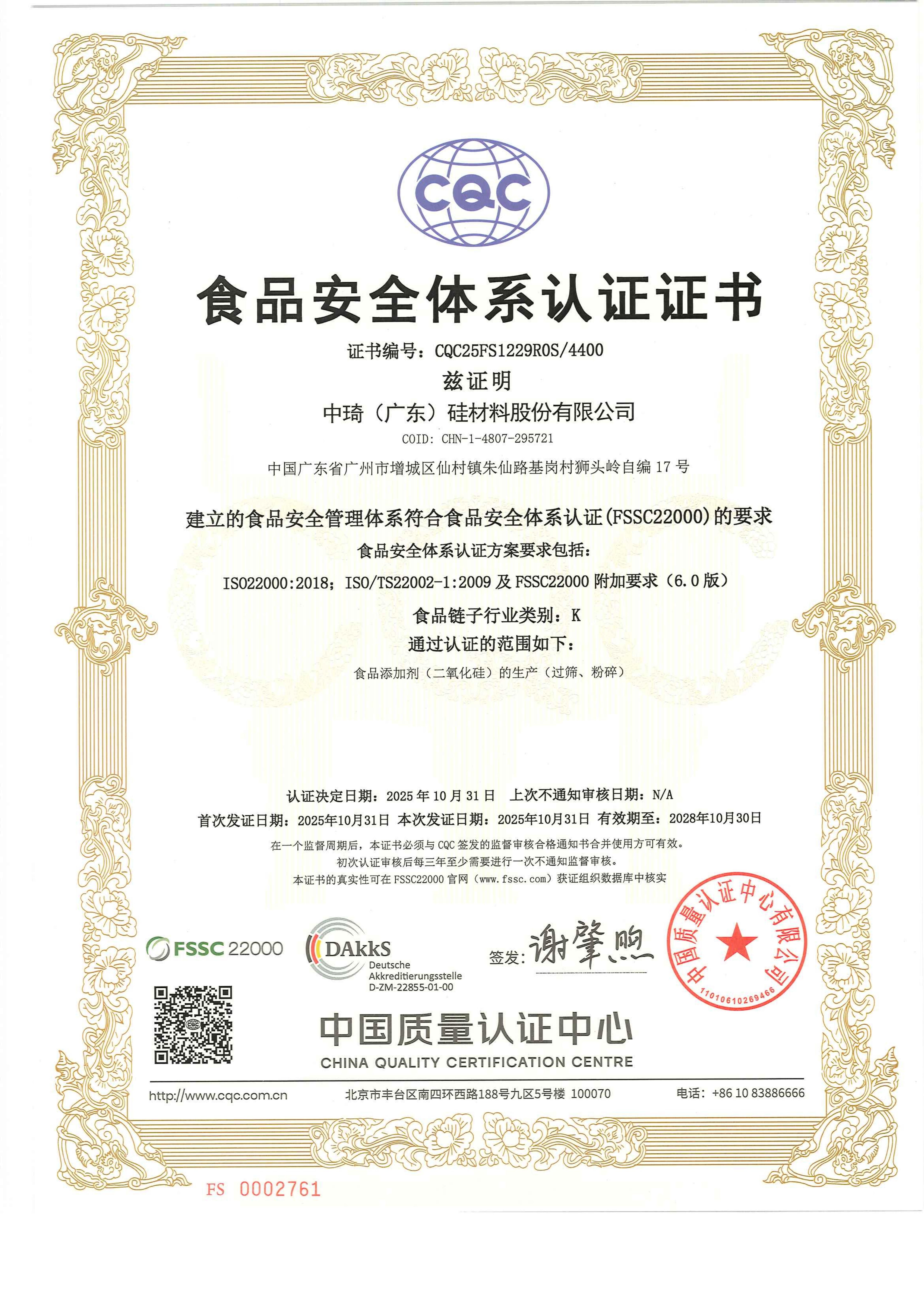
- FSSC 22000 (v6.0) — GFSI-recognized food safety management certification. Verification Certificate No. CQC25FS1229R0S/4400, valid 2025–2028.
- ISO 22000:2018 — food safety management system certification, Certificate No. 116FSMS1300022.
- ISO 9001:2015 — quality management system certification, Certificate No. 11425Q410600R1S, valid to October 2028.
- FAMI-QS v6.0 — required for feed-ingredient supply; Certificate No. 11625FAM0017, valid to March 2028.
- HACCP production system certification.
Religious and Market-Access Certifications
- SHC HALAL — issued to the Halal Regulations and MS1500:2019 standard, Certificate No. 1198250000, valid to May 2028.
- OU Kosher (Parve) — issued by the Orthodox Union, Certificate No. OUV2-JZVTP4.
- US FDA Food Facility Registration — Registration No. 14857861616 under 21 CFR Part 112.
- SMETA Sedex 4-Pillar — social compliance audit, Report No. ZAA600166938, issued by Intertek.
Product Standards Compliance
- GB 25576-2020 — China Food Additive Silicon Dioxide standard.
- GB 2760 — China hygienic standard for food additive use.
- US FDA 21 CFR 172.480 (GRAS) and FCC (Food Chemicals Codex).
- EU E 551 under Commission Regulation (EU) No 231/2012 (purity criteria) and Regulation (EC) No 1333/2008 (use provisions).
- JECFA — ADI evaluated as "not specified" (the highest safety tier).
- USP-NF / EP / JP pharmacopoeia specifications, where pharmaceutical or supplement use is intended.
Buyer check point: Ask for the certificate number, issuing authority and expiry date for each document — not just a scanned image. Certificates expire, and an expired FSSC 22000 or HALAL certificate is a live risk for your own filing.
Reading an E551 Silica Specification Sheet: Parameters That Actually Decide
Once certification passes, the specification sheet determines whether the material will work in your formulation. These are the parameters worth verifying line by line.
Silicon Dioxide Content and Heavy Metals
High-purity grades run SiO₂ ≥99%; pharmaceutical grades reach SiO₂ ≥99.5%. Inside that, the heavy-metal profile is where suppliers differentiate. Industry-standard internal control for premium Chinese E551 food grade silica sits at Pb ≤0.1 mg/kg and As ≤1 ppm, with iron (Fe) ≤5 ppm against a national limit of 30 ppm. Pharmacopoeia grades sit at Pb ≤1–2 ppm and total heavy metals ≤10 ppm.
That iron number matters more than buyers expect. Iron ions are the primary driver of yellowing when silica is blended into flavor systems containing ethyl maltol. Even trace iron forms coloured complexes that turn powders yellow, dull white creams and cloud clear gels. A low-iron, non-yellowing grade is not a marketing variation — it is a different specification.
Loss on Drying (LOD), Loss on Ignition (LOI) and pH
LOD measures free moisture. High LOD defeats the purpose of an anti-caking agent: the silica adds moisture to the system rather than absorbing it. Premium food grades typically control LOD around 4.27%, against competitor specifications of ≤6%. LOI measures bound water and trace organic residue; food grades generally sit near 3.85%, well below the ≤8.5% ceiling. pH for standard grades sits in the 6.0–7.5 range; acidic systems sometimes require a deliberately acidic grade, and pH compatibility should be validated with a trial before full-scale production.
BET Surface Area, D50 and Oil Absorption
BET surface area measures porosity. General anti-caking grades typically run around 190 m²/g; high-adsorption grades can reach 700 m²/g. D50 is the median particle size — fine grades around 6–8 μm for beverages, medium grades at 10–15 μm for tablet flow aids, coarser grades for carrier systems. Oil absorption (DBP value) determines how much liquid a grade can carry; higher values suit liquid flavor and vitamin carriers.
Microbial Limits
Microbial control follows USP <61>/<62> and food-grade requirements: total aerobic count, moulds and yeasts are controlled, and pathogens such as E. coli must be absent. Premium pharmaceutical-adjacent grades hold total count below 100 CFU/g. Standard food grades are typically specified below 30,000 CFU/g with actual results often under 1,000 CFU/g.
How to Evaluate a China E551 Silica Manufacturer: 7-Point Framework
This framework is designed for the evaluation stage — after you have a shortlist, before you place a bulk order.
- Verify certifications at source. Request certificate numbers, issuing bodies and validity dates. Confirm the scope actually covers food-additive silica, not just the general company.
- Compare specifications against your target market. EU-bound material needs E 551 conformity; US-bound material needs FCC and 21 CFR 172.480; Japan-bound material has its own fine silica monographs; feed applications require FAMI-QS.
- Request a full COA, not a summary. A proper COA covers appearance, SiO₂ (ignited), LOD, LOI, pH, Pb, As, Cd, Hg, total heavy metals, soluble salts, chlorides, sulfates, and the full microbial panel.
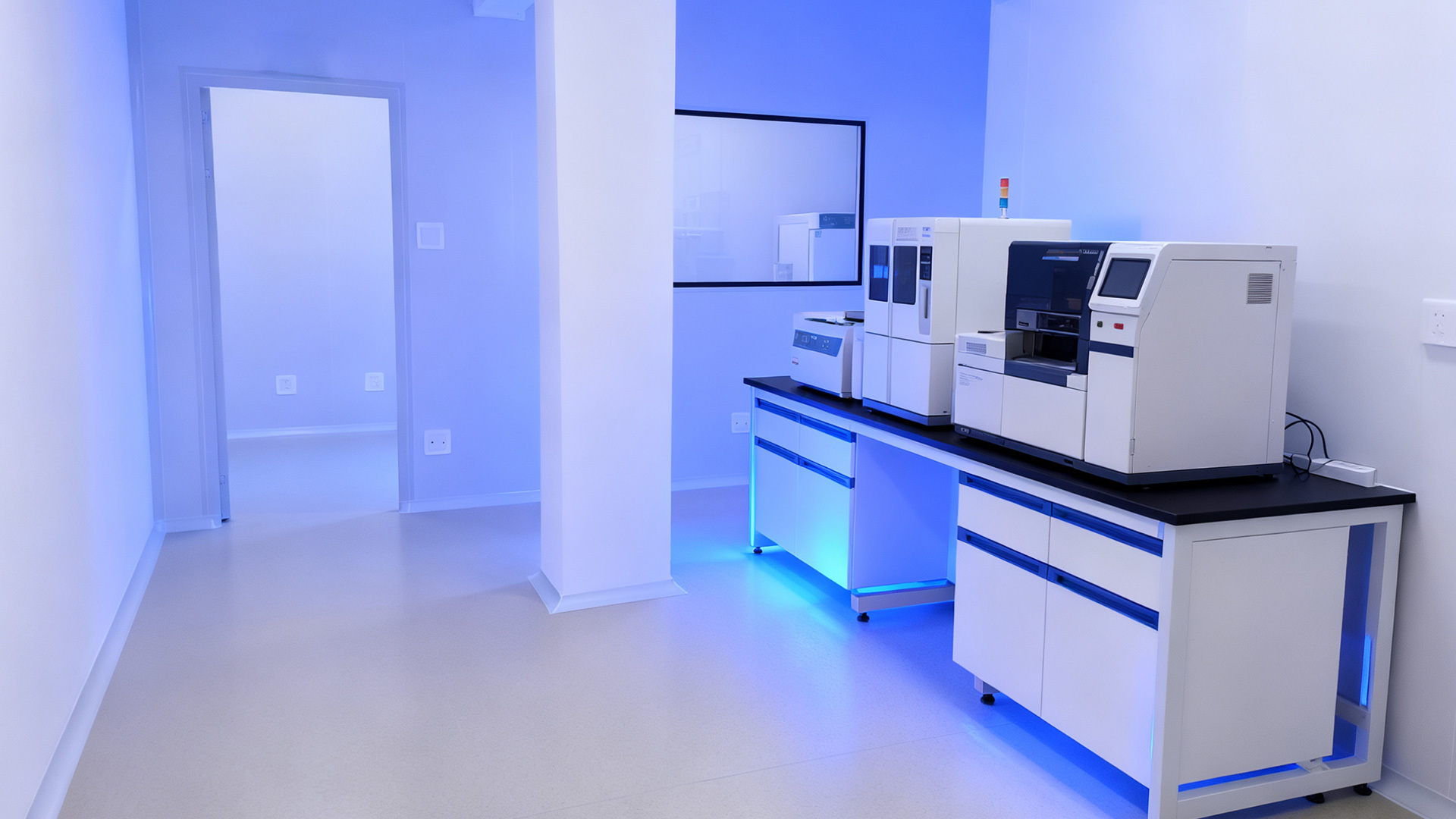
- Confirm GMP and dedicated-line status. Dedicated food-grade lines avoid cross-contamination with industrial grades. GMP-certified dust-free workshops with full batch traceability are the baseline.
- Run a sample validation. COA compliance does not guarantee finished-product performance. Two grades with similar specs can behave very differently in the same formulation. Run a pilot trial at 1–25 kg with parallel tests against your existing material before committing.
- Check capacity and lead time. Monthly output, standing inventory, packaging options and delivery windows all determine whether a supplier can support continuous production.
- Verify the commercial terms. MOQ, Incoterms, payment terms, documentation support and complaint-handling procedure should all be written into the agreement — not assumed.
Common failure mode: A buyer approves a supplier based on a COA and then discovers the pilot batch behaves differently at scale. Skipping the pilot trial is the single most expensive shortcut in this category.
Application Notes: Matching Grade to Product
Grade selection is application-driven, not price-driven. The following patterns reflect common buying decisions for food grade silica.
Salt, Spices and Seasonings
Salt and seasoned salt typically use a 325-mesh grade with D50 around 44 μm and BET around 170 m²/g at a dose of 0.5–1%. Chili powder, curry and compound seasonings require higher oil absorption to handle natural oil content.
Non-Dairy Creamer, Milk Powder and Instant Beverages
These systems are fat- and sugar-rich and highly humidity-sensitive. Grades with D50 of 40–60 μm and BET around 230 m²/g keep the powder free-flowing through long storage and humid logistics. Dispersion quality matters: poorly matched grades leave visible white residue in hot or cold water.
Flavors, Vitamin Carriers and Botanical Extracts
Liquid flavors, essential oils and botanical extracts are converted into free-flowing powders using high-adsorption silica. Non-discolouring grades are essential where ethyl maltol or heat-sensitive flavours are present.
Edible Oil Refining and Beer Filtration
Adsorbent silica grades remove phospholipids, residual soaps and trace metals such as iron and copper — supporting the oxidation stability of refined oil. Beer filtration grades selectively adsorb chilling-haze proteins and polyphenols while preserving foam and malt character. In both cases the silica is a processing aid and must be fully removed by filtration.
Pharmaceutical and Nutraceutical Applications
For tablets and capsules, the silica functions as a glidant, adsorbent and stabilizer. This is where USP pharmaceutical silica grades come into play, with pharmacopoeia-compliance documentation and tighter microbial limits.
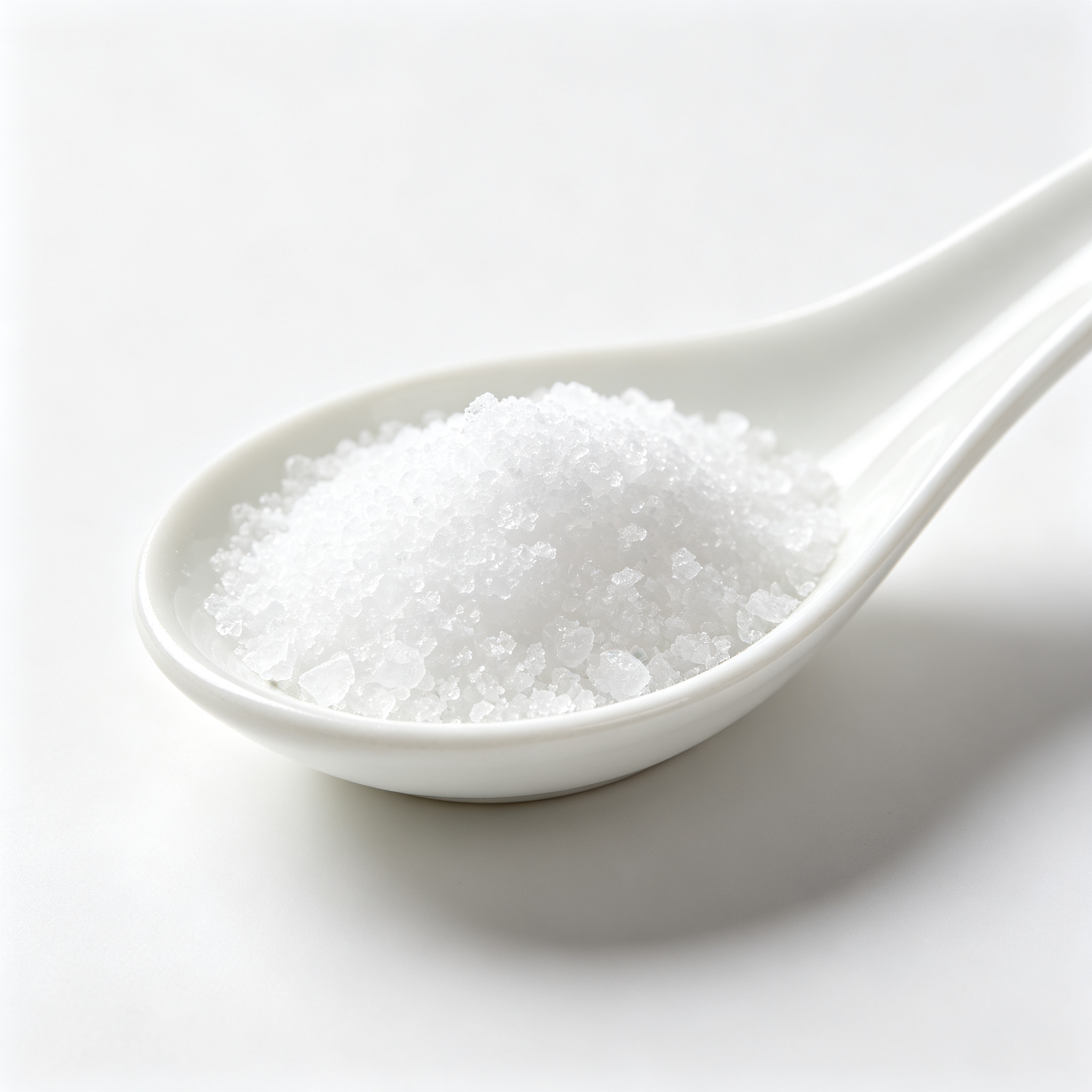
Comparing Grade Tiers: What Buyers Actually Get at Each Level
The table below compares the four tiers commonly offered by Chinese E551 manufacturers. All figures reflect specification ranges documented in the source materials.
| Grade Tier | SiO₂ Content | Heavy Metals / Iron | Typical Microbes | Primary Applications |
|---|---|---|---|---|
| General-Purpose | ≥96% | Standard GB 25576 limits | Food-grade panel | Salt, sugar, bouillon, solid beverages |
| Functional Enhanced | ≥97% | Anti-caking ≥97%; angle of repose ≤28° | Food-grade panel | High-speed filling, tablet flow aids |
| High-Purity Food | ≥99% | Pb ≤0.1 mg/kg, As ≤1 ppm, Fe ≤5 ppm | Pathogens absent | Premium food, flavours, low-iron non-yellowing systems |
| Pharmacopoeia Grade | ≥99.5% | Pb ≤1–2 ppm, total heavy metals ≤10 ppm | Total count <100 CFU/g | Pharma excipients, nutraceuticals, oral solids |
Two additional tiers exist for specific function: heavy-metal-free grades (SiO₂ ≥99.0%, residual heavy metals ≤0.01 mg/kg) and application-specific grades such as bakery grade (rated to 200 °C, specified free of grit), seasoning/spice grade (odourless, flavour-preserving) and beverage powder grade (rapid dissolution, no sediment).
Documentation and Supply Terms: What a Working Relationship Looks Like
After specification and grade selection, the practical questions are documentation and supply reliability.
Documentation. A Certificate of Analysis should accompany every batch. Supporting documents include MSDS, regulatory compliance certificates, TSE/BSE-free statements, allergen statements and, where applicable, Halal and Kosher certificates. For feed applications, a FAMI-QS certificate and feed safety statement are supplied with shipment.
Packaging. Options include 10 kg, 15 kg and 20 kg bags, 1 kg retail bags and jumbo bags. For LCL orders, a 50 kg MOQ applies. Moisture-barrier packaging with desiccants is recommended for humid-season shipments.
Lead time. Stocked items typically ship in 3–10 days; custom orders take 10–20 days. Incoterms supported include EXW, FOB, CIF and DDP.
Storage and shelf life. Sealed and stored under cool, dry, ventilated conditions at ≤30 °C and ≤75% RH, shelf life runs to 24 months. Opened bags should be resealed immediately and used within three months.
Where Zhonglian Food Silica Sits in This Landscape
Zhonglian Food Silica, operating through Shandong Zhonglian Chemical Co., Ltd. and its parent Zhongqi (Guangdong) Silicon Material Co., Ltd., is a working example of the compliance-first model described above. The company was founded in 2006, incorporated in December 2011, and listed on the Guangdong Equity Exchange in 2021 (stock code 880747).
Its operating profile maps directly onto the evaluation criteria in this guide:
- Manufacturing: GMP-certified dust-free workshops with dedicated food-grade lines in Guangdong; a 17,000 m² factory footprint; annual silica capacity of approximately 50,000 metric tons.
- Quality control: 26-step full-lifecycle inspection, atomic fluorescence spectrometers, laser particle analyzers and HPLC; full batch traceability; internal heavy-metal limits 50–70% stricter than national standards (Fe ≤5 ppm versus the 30 ppm national limit; Pb ≤0.1 mg/kg; As ≤1 ppm).
- Compliance: National High-Tech Enterprise (GR202344001779, 2023); ISO 9001:2015, ISO 22000:2018, FSSC 22000 v6.0, FAMI-QS v6.0; HALAL, OU Kosher, US FDA registration and SMETA Sedex 4-Pillar; third-party testing by Intertek, CQC and other bodies.
- Products: E551 precipitated silica, anti-caking silica, adsorbent silica, pharmaceutical excipient silica, toothpaste silica, cosmetic silica, pet-feed silica and industrial silica, with particle size, BET, oil absorption and packaging customizable to application.
- Supply: Export share of approximately 70%; markets across Europe, North America, Japan, South Korea, Southeast Asia and the Middle East; monthly capacity around 3,000 metric tons.
- Track record: Passed a Nestlé on-site audit in October 2025 to become an approved supplier for pet food and food wet/dry mixing scenarios; a decade-long COFCO partnership; oil adsorbent supply into Yihai Kerry refining; animal-fat adsorbent use in the Haidilao supply chain with reported filtration efficiency gains around 40%; and Zoilsil58GS used for beer filtration by Snow Beer and Budweiser.
For buyers at the evaluation stage, that combination — certification depth, documented impurity control and a verifiable customer audit history — is the practical definition of a credible China E551 food grade silica manufacturer.
Frequently Asked Questions
Q1: Which certifications should a China E551 food grade silica manufacturer hold for EU and US exports?
A supplier exporting to both markets should hold FSSC 22000, ISO 22000:2018 and ISO 9001:2015 system certifications, plus product-level conformity to EU E 551 under Commission Regulation (EU) No 231/2012 and Regulation (EC) No 1333/2008, and to US FDA 21 CFR 172.480 (GRAS) with FCC compliance. For markets requiring religious certification, SHC HALAL and OU Kosher should also be current. USDA and EU buyers increasingly require the certificate number, issuing authority and expiry date so they can verify scope directly.
Q2: What heavy-metal limits should the specification sheet show for premium E551 silica?
For high-purity food grades, Pb ≤0.1 mg/kg and As ≤1 ppm represent current best practice among compliant manufacturers, with Fe ≤5 ppm against a national limit of 30 ppm. Pharmacopoeia grades (USP-NF, EP, JP) sit at Pb ≤1–2 ppm and total heavy metals ≤10 ppm. Heavy-metal raw materials are not added during production; residual levels are controlled through raw-material selection and purification, and are reported per batch on the Certificate of Analysis.
Q3: What are the typical MOQ, lead time and packaging options?
Standard MOQ is 1 metric ton, with a 50 kg minimum for LCL orders. Stocked items typically ship in 3–10 days and custom orders in 10–20 days, depending on product, quantity, inventory and destination. Packaging options include 1 kg retail bags, 10 kg, 15 kg and 20 kg bags, and jumbo bags, with moisture-barrier options recommended for humid-season shipping. Incoterms supported include EXW, FOB, CIF and DDP.
Q4: How can a buyer verify that the quality actually matches the documentation?
Three steps are standard. First, request a full batch COA covering SiO₂ (ignited), LOD, LOI, pH, Pb, As, Cd, Hg, total heavy metals, soluble salts, chlorides, sulfates and the complete microbial panel. Second, run a 1–25 kg pilot trial with parallel testing against your current material, evaluating flowability, anti-caking performance, colour and solubility, and an accelerated stability test at 40 °C / 75% RH for 2–4 weeks. Third, request third-party confirmation from a recognised laboratory for key trace elements. COA compliance alone does not guarantee finished-product performance.
Q5: What is the practical difference between food grade and pharmaceutical grade silica?
They differ in purity control, production environment and regulatory basis. Food grades are manufactured to GB 25576-2020 and E551, with heavy metals controlled to food-grade limits. Pharmaceutical grades meet USP-NF, EP or JP monographs, with tighter limits on microbial load, residue on ignition and elemental impurities. The two are produced on separate dedicated lines to prevent cross-contamination, and the choice should follow the end product's target market and regulatory submission path rather than cost alone. Buyers needing a starting point can review the full food grade silica brochure, which sets out grade specifications and compliance documentation in one document.
Next Step: Evaluate with a Sample, Not a Quote
Specification sheets narrow the field, but a pilot trial decides it. Zhonglian Food Silica supplies free food grade silica samples with per-batch COA and certificates for approved applications, so buyers can run a parallel trial against their current material before committing to volume.
Contact: Levin · Email: levin@silicaplant.com · Website: www.silicaplant.com
Download the food grade silica brochure: FOOD GRADE SILICA BROCHURE 20251015 (PDF)
Conclusion
Choosing a China E551 food grade silica manufacturer is a compliance decision before it is a commercial one. The suppliers worth shortlisting are those that can produce verifiable FSSC 22000, ISO 22000 and ISO 9001 certificates alongside product-level E 551, FDA 21 CFR 172.480 and FCC conformity — and then back that up with per-batch COAs, tight heavy-metal and microbial control, and a documented audit history your own quality team can review.
Grade selection follows from there: general-purpose grades for salt and solid beverages, high-purity low-iron grades for flavour systems at risk of yellowing, high-adsorption grades for liquid carriers, and pharmacopoeia grades for tablet and capsule applications. Once that mapping is clear, the remaining variable is execution — pilot validation, packaging, lead time and supply continuity. That is where a supplier with GMP-certified dedicated lines, roughly 50,000 metric tons of annual capacity and a 70% export share tends to separate itself from the field.
Have Questions or Need More Details?
Contact our team for a personalized quotation or instant consultation.
Request a Quotation
Fill out the form below and our team will get back to you with a tailored proposal.
WhatsApp Direct Chat
Prefer to chat in real-time? Message us on WhatsApp for instant assistance & quick answers.
- Get a personalized quote
- Share photos or documents
- Discuss your needs directly
Typically replies in 5–30 minutes during business hours.