
Precipitated vs. Fumed Silicon Dioxide for Food Powder Flow
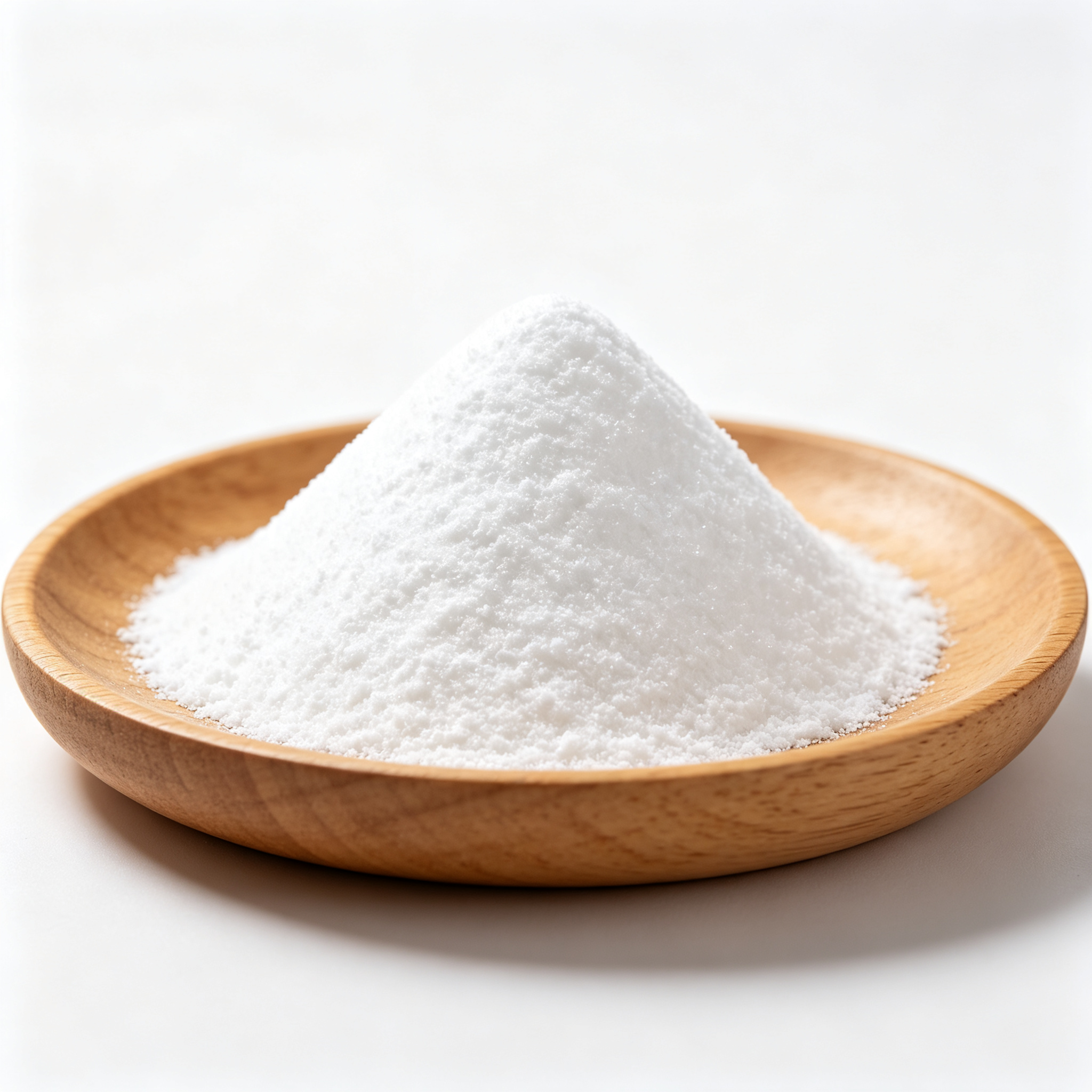
Free-flowing food-grade silicon dioxide powder. Choosing the right form—precipitated, fumed, or a dedicated free-flow agent—determines how well dry mixes, creamers, and seasonings perform.
Food powders fail in one of two ways: they cake into hard lumps or they stop flowing evenly through hoppers, augers, and filling lines. The fix is rarely a single answer. For buyers and formulators, the practical question is not “which silica is best,” but “which form of silicon dioxide matches my powder, my process, and my compliance requirements.”
This guide compares four options that appear in food powder flow discussions: Food Grade Precipitated Silica, Food Grade Fumed Silica, Free Flow Agent Silica, and E551 Precipitated Silica. The comparison covers oil absorption, pH, moisture pickup, caking behavior, and the scenarios where each form fits—dry mixes, non-dairy creamer, and seasonings.
For clarity, all four are built on the same core chemistry. Food-grade silicon dioxide has CAS number 7631-86-9 and is classified in the EU as food additive E551. Fumed silica is also amorphous silicon dioxide, but its manufacturing route changes its physical structure and handling behaviour. The differences that matter are structural, not just regulatory.
Problem Definition: Why Food Powders Cake and Stop Flowing
Caking is a surface and moisture problem. Fine powders have enormous surface area. When humidity rises, water condenses on particle surfaces. Capillary bridges form. Under pressure in a bag or silo, those bridges harden into lumps. Oils and fats add a second mechanism: liquid bridges that survive drying and hold particles together.
Anti-caking agents work by interrupting those bridges. They coat particle surfaces, absorb free moisture, physically separate grains, and in some cases absorb surface oils. Silicon dioxide is effective because it is chemically inert, available in food-grade quality, and can be engineered into different pore structures and particle sizes.
The problem definition for a buyer is narrower: you need a powder that stays free-flowing through storage, transport, and filling; you need consistent bulk density and flow rate; and you need a grade that satisfies FDA, EU, and buyer-specific documentation. The wrong choice shows up as line stoppages, rejected batches, or customer complaints about clumping.
Industry Background: Regulatory and Market Context
The regulatory framework for food-grade silicon dioxide is well established. In the United States, the FDA lists silicon dioxide as an approved direct food additive under 21 CFR 172.480. It is permitted as an anticaking agent at levels not to exceed 2 percent by weight of the food. The FDA also classifies it among anti-caking agents that keep powdered foods free-flowing and prevent moisture absorption.
In the European Union, silicon dioxide carries the food additive number E551. It is covered by Commission Regulation (EU) No 231/2012 for purity criteria and Regulation (EC) No 1333/2008 for use provisions. The Joint FAO/WHO Expert Committee on Food Additives (JECFA) evaluated the acceptable daily intake as “not specified,” a status reserved for substances of very low toxicity.
For China, the applicable standard is GB 25576-2020, “Food Additive – Silicon Dioxide,” together with GB 2760 for use. The United States Pharmacopeia–National Formulary (USP–NF), European Pharmacopoeia (EP), and Japanese Pharmacopoeia (JP) monographs provide pharmacopoeia-grade specifications when needed.
From a sourcing perspective, “FCC Grade Silicon Dioxide” means the material complies with the Food Chemicals Codex monograph. This is a common documentation requirement for North American buyers. A supplier that can provide a batch-specific Certificate of Analysis (COA) tied to the applicable standard—whether GB 25576-2020, FCC, or EU 231/2012—removes a major compliance bottleneck.
Within this framework, the four product forms in this guide are not competing regulatory categories. They are different physical forms and application-specific grades of the same food additive. The choice depends on powder chemistry and process economics.
Detailed Solution: Comparing the Four Forms
1. Food Grade Precipitated Silica (ZLSIL Series)
Precipitated silica is produced through a wet process, typically using sodium silicate and sulfuric acid, followed by filtration, drying, and milling or granulation. The resulting material is amorphous silicon dioxide with a porous structure. Its CAS number is 7631-86-9, and it is classified as E551 in the EU.
This is the workhorse for food powder flow. The pores absorb free moisture and surface oils. Typical food-grade precipitated grades have a pH between 6.0 and 7.5, which suits most neutral food systems. Loss on drying (LOD) is often controlled at ≤6.5% for free-flow grades, and specific surface area (BET) can range from about 150 to 250 m²/g depending on the grade.
Zhonglian’s ZLSIL series includes a broad range of model designations, such as ZLSIL-W58A/58A, ZLSIL-W22S, ZLSIL-W58, ZLSIL-W22, ZLSIL-W50S, ZLSIL-W3050, ZLSIL-W3150, ZLSIL-W1FP, ZLSIL-W72FP, and ZLSIL-W74FP, among others. These grades are used as anti-caking agents, flow aids, and carriers. Particle size, BET, oil absorption, and particle size distribution can be customized to application requirements.
For dry mixes, precipitated silica blends easily and does not add off-flavours. In non-dairy creamer, it helps prevent caking during humid storage and keeps the powder free-flowing. In seasonings and spice blends, it absorbs surface oils that would otherwise cause clumping.
2. Food Grade Fumed Silica
Fumed silica is made by high-temperature flame hydrolysis of silicon tetrachloride or methyltrichlorosilane. The primary particles are nano-scale, typically 7–40 nm, and fuse into branched aggregates. The result is an extremely high specific surface area, often 100–400 m²/g, with SiO₂ content ≥99.8% for standard fumed grades.
Fumed silica is not porous in the same way as precipitated silica. Its surface area comes from the small primary particle size and the chain-like aggregates. This gives it strong thickening and anti-settling properties in liquid systems, and it can be effective at low dosage for free-flow in powders. Typical pH is acidic, around 3.6–4.5, and loss on drying is low, ≤2.5%, because the material is essentially anhydrous.
In food powder flow, fumed silica is often used when a very low dosage is needed or when the formulator wants minimal moisture introduction. However, the acidic pH and high surface area can interact differently with sensitive ingredients. It is also more expensive per kilogram than precipitated silica. For food applications, the food-grade fumed silica options in the Zhonglian portfolio are available under the ZLXIDE-P200, ZLXIDE-P300, ZLXIDE-P380, and ZLXIDE-P972 model series.
3. Free Flow Agent Silica
Free Flow Agent Silica is a dedicated application-grade precipitated silica designed specifically to improve flowability and prevent caking. In the Zhonglian portfolio, examples include ZLSIL-W58A/58A, ZLSIL-W22S, and ZLSILW58E. The material is precipitated amorphous silica, CAS 7631-86-9, E551.
A representative specification for this group includes D50 14–19 μm, BET 180–190 m²/g, pH 6.0–7.5, and LOD ≤6.5%. It is described as general-purpose with a typical dosage of 0.2–1%. The target applications are food powders, seasonings, instant drinks, chemical powders, and feed premixes.
This grade sits between a general precipitated silica and a highly specialised carrier. It is engineered for free-flow performance, with a particle size distribution that disperses evenly in dry blends. The near-neutral pH makes it compatible with a wide range of food matrices. For dry mixes and seasonings, it is often the most straightforward substitution for existing free-flow agents.
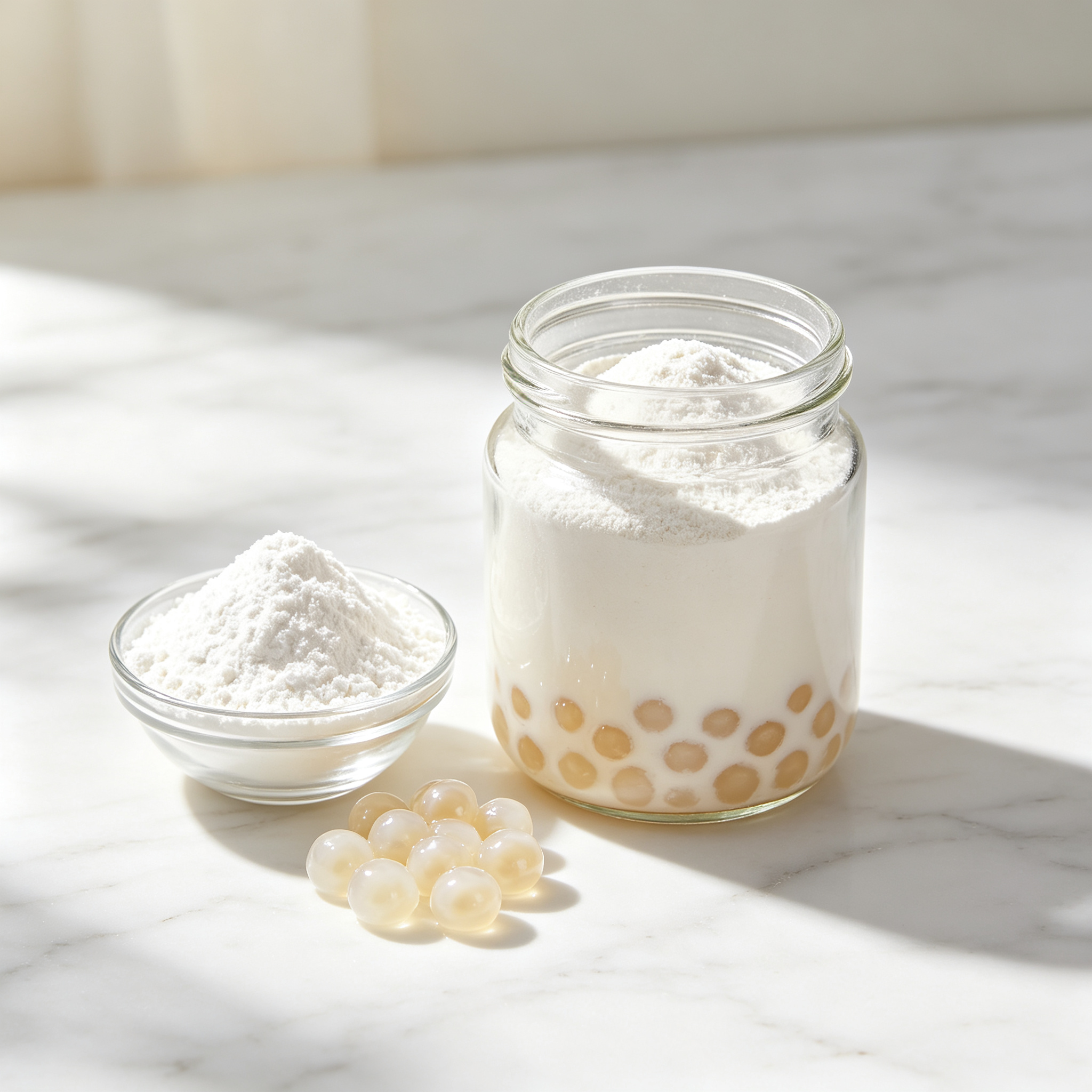
Non-dairy creamer is a classic test case for free-flow agents: fat content, humidity, and storage pressure all push the powder toward caking.
4. E551 Precipitated Silica
E551 Precipitated Silica is not a different chemistry; it is the EU food additive designation for silicon dioxide. The Zhonglian E551 Precipitated Silica product line includes multiple models such as ZLSIL-W1FP, ZLSIL-W72FP, ZLSIL-W74FP, ZLSIL-W3050, ZLSIL-W3150, ZLSIL-WG156F, ZLSIL-W1450, and ZLSIL-W2000.
The key point for buyers is documentation. A supplier offering E551 Precipitated Silica should be able to demonstrate compliance with EU Regulation 231/2012 and 1333/2008, and provide a COA for the specific batch. Because E551 covers the family of silicon dioxide, the functional behaviour still depends on the physical grade—particle size, pore structure, and LOD.
When comparing E551 Precipitated Silica with a general Food Grade Precipitated Silica, the difference is often in the compliance file rather than the powder. For EU-facing products, specifying E551 from the start avoids reformulation later.
Oil Absorption, pH, and Moisture Pickup: What Changes Performance
Oil absorption is a measure of how much liquid a silica can carry. Higher oil absorption means the material can absorb more surface oils and liquid flavours. It is particularly relevant for seasonings, spice blends, and high-fat powders such as non-dairy creamer. Precipitated silicas tend to have higher oil absorption than fumed silicas because of their porous structure. Fumed silica has a high surface area but is essentially non-porous, so its oil absorption is lower.
pH affects compatibility with sensitive ingredients. Precipitated food grades are typically near-neutral, pH 6.0–7.5. This is suitable for most dry mixes, dairy blends, and seasonings. Fumed silica is acidic, pH 3.6–4.5. In acidic food systems, that may be acceptable; in neutral or alkaline systems, it can shift the local pH around particles and affect flavours, colours, or active ingredients. This is why formulators often prefer precipitated silica for neutral powders.
Moisture pickup is controlled through loss on drying (LOD). A low LOD means the silica itself contributes little moisture. Free Flow Agent Silica typically has LOD ≤6.5%, while fumed silica is ≤2.5%. In very humid environments, a low-LOD fumed silica may be attractive, but a precipitated grade with good pore structure can still absorb incoming moisture and protect the powder. The right choice depends on whether the risk is moisture already in the powder or moisture entering during storage.
Caking behavior is the practical outcome. Precipitated silica fights caking through absorption and physical separation. Fumed silica fights caking through particle separation and minimal moisture addition. Free Flow Agent Silica is optimised for the balance of both in food powders. In a dry mix, a free-flow agent at 0.2–1% often delivers the most predictable result.
Step-by-Step Breakdown: How to Select and Validate
Step 1: Define the powder problem. Is the issue caking in the bag, poor flow in the hopper, or both? High-fat powders such as non-dairy creamer need oil absorption. Hygroscopic powders such as seasoning blends need moisture absorption. Dry, free-flowing powders that only bridge under pressure may need particle separation.
Step 2: Match the grade to the application. For dry mixes and seasonings, start with a free-flow agent precipitated silica. For neutral dairy blends and creamers, a food-grade precipitated silica with pH 6.0–7.5 is a safe starting point. For acidic systems or very low dosage requirements, consider fumed silica. For EU-facing labels, specify E551 precipitated silica.
Step 3: Check compliance documentation early. Confirm that the supplier can provide the applicable standard for your market: GB 25576-2020 for China, FDA 21 CFR 172.480 and FCC for the United States, and EU 231/2012 for Europe. Ask for a batch-specific COA. If you need USP–NF, EP, or JP specifications, confirm those are available.
Step 4: Run a dosage gradient trial. Silica dosage is not one-size-fits-all. Test 0.2%, 0.5%, 1.0%, and 2.0% within the applicable regulatory limit. Evaluate caking after accelerated storage at controlled temperature and humidity. Compare flow rate, bulk density, and appearance. Select the lowest effective dosage.
Step 5: Validate with pilot production. Use the same batch as intended for full-scale production. Check that the silica disperses evenly, does not create dust problems, and does not change flavour or colour. For non-dairy creamer, verify that the powder remains free-flowing after typical warehouse storage.
Step 6: Confirm supply and documentation. Check lead time, MOQ, and packaging. Zhonglian’s standard lead time is 7–10 days for stocked items, but actual lead time depends on product, quantity, inventory, and destination. The MOQ is 1 ton. Free samples and COA are available for evaluation.
Use Cases: Where Each Form Fits Best
Dry Mixes
Dry mixes—soup bases, baking premixes, instant drink powders, and powdered sugar—often cake because of moisture migration. Free Flow Agent Silica at 0.2–1% is designed for this scenario. Its particle size distribution and pH 6.0–7.5 help it blend evenly without altering taste. E551 Precipitated Silica is the same functional choice when EU compliance is required.
Non-Dairy Creamer
Non-dairy creamer contains fat, which can create oil bridges between particles. Here, oil absorption matters as much as moisture control. Precipitated silica grades with high oil absorption help keep the creamer free-flowing. A food-grade precipitated silica with a neutral pH and appropriate BET is a practical choice. If the formulation is sensitive to moisture addition, a low-LOD fumed silica could be considered, but the acidic pH should be evaluated against the creamer system.

Precipitated amorphous silica, CAS 7631-86-9, E551. The porous structure supports both moisture and oil absorption.
Seasonings and Spice Blends
Seasonings such as chili powder, curry, garlic powder, and compound seasonings contain essential oils and hygroscopic ingredients. They cake easily and lose flow during humid storage. A free-flow agent precipitated silica and a dedicated seasoning-grade precipitated silica both help. The key requirements are oil absorption, neutral pH, and no flavour masking. Particle size should be fine enough to disperse without visible white specks.
Comparison Table: Four Forms at a Glance
| Form | Typical Properties (Verified) | Oil Absorption & Moisture | Best-Fit Scenarios |
|---|---|---|---|
| Food Grade Precipitated Silica (ZLSIL series) | CAS 7631-86-9; E551; pH 6.0–7.5; porous structure; customizable D50, BET, oil absorption | High oil absorption from porosity; LOD typically ≤6.5% for free-flow grades | Dry mixes, non-dairy creamer, seasonings, salt, powdered sugar, general food powders |
| Food Grade Fumed Silica (ZLXIDE-P series) | Primary particle 7–40 nm; BET 100–400 m²/g; SiO₂ ≥99.8%; pH 3.6–4.5; LOD ≤2.5% | Lower oil absorption (non-porous); very low moisture addition | Low-dosage powder flow, acidic systems, moisture-sensitive formulations; not the first choice for high-fat powders |
| Free Flow Agent Silica (ZLSIL-W58A/58A, W22S, W58E) | D50 14–19 μm; BET 180–190 m²/g; pH 6.0–7.5; LOD ≤6.5%; dose 0.2–1% | Balanced moisture and oil absorption; designed for free-flow | Food powders, seasonings, instant drinks, chemical powders, feed premixes |
| E551 Precipitated Silica (ZLSIL-W1FP, W72FP, W74FP, W3050, W3150, etc.) | EU food additive E551; CAS 7631-86-9; complies with EU 231/2012 and 1333/2008 | Same physical behaviour as the selected precipitated grade | EU-labeled dry mixes, creamers, seasonings; any application requiring E551 documentation |
Note on CAS and compliance: Food-grade precipitated silica and E551 precipitated silica share CAS 7631-86-9. Fumed silica is also amorphous silicon dioxide and is available in food-grade qualities from Zhonglian under the ZLXIDE-P series. Always confirm the exact grade and COA for your target market.
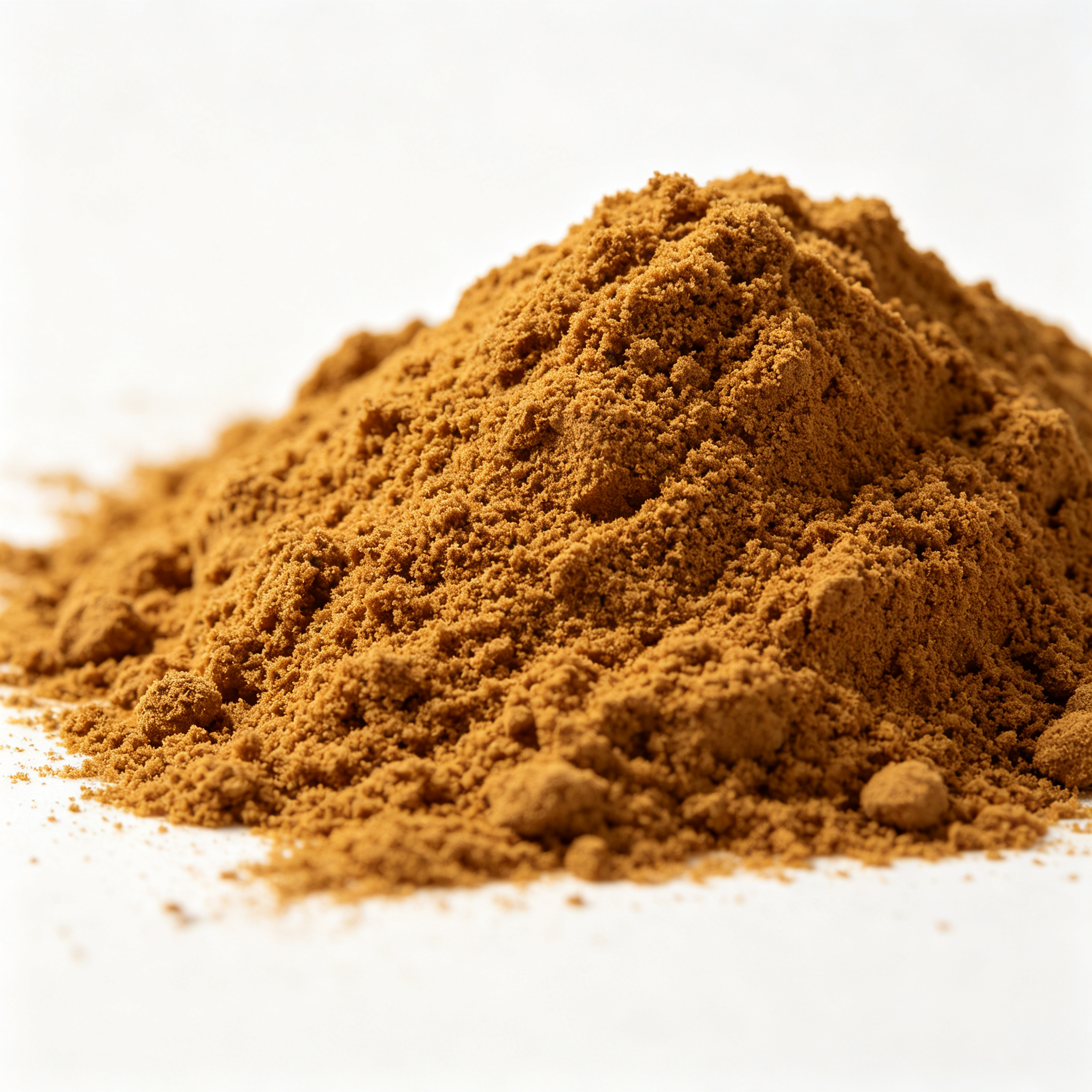
Compound seasonings combine hygroscopic salts, spices, and oils—making them a strong test for oil absorption and pH compatibility.
FAQ: Compliance, Capability, Budget, Samples, and Lead Time
1. Do these silicon dioxide grades comply with FCC and E551 for food use?
Yes, subject to the exact grade and market. Food-grade silicon dioxide from Zhonglian is manufactured to comply with GB 25576-2020, FDA 21 CFR 172.480 (GRAS), and FCC requirements for the United States, and with EU E551 under Commission Regulation (EU) No 231/2012 and Regulation (EC) No 1333/2008. JECFA has evaluated the ADI as “not specified.” A batch-specific COA is provided, and specifications can be adjusted to the target market.
2. How do I choose between precipitated and fumed silica for powder flow?
Start with the powder chemistry. For neutral dry mixes, non-dairy creamer, and seasonings, precipitated silica—especially a free-flow agent grade—is usually the better fit because of its porous structure, high oil absorption, and near-neutral pH 6.0–7.5. For very low-dosage or moisture-sensitive systems where an acidic pH of 3.6–4.5 is acceptable, fumed silica can be considered. Validate with a dosage-gradient trial before switching.
3. Can particle size, BET, and moisture be customized?
Yes. Particle size can be customized within 2–300 μm; moisture content can be customized within 0.5–7.0%; and specific surface area (BET), oil absorption, particle size distribution, and whiteness can be tailored to application requirements. Custom grades are available with whiteness ≥98%.
4. What samples and documentation are available before ordering?
Free samples are available for evaluation. Documentation includes a batch-specific COA, MSDS, and compliance statements for the applicable market. Third-party testing reports can be provided on request. For pharmacopoeia-grade inquiries, USP–NF, EP, and JP specifications are available with lead ≤1–2 ppm and total heavy metals ≤10 ppm.
5. What is the MOQ and lead time?
The MOQ is 1 ton. Standard lead time is 7–10 days for stocked items, but actual lead time depends on the specific product, quantity, inventory, and destination. Export orders can be arranged on FOB or CIF terms. For larger projects, the team can discuss scheduling and inventory planning.
Ready to test a free-flow solution?
Request a free sample, compare precipitated and fumed grades side-by-side, and validate the right dosage for your powder.
 Request a sample
Download the food-grade silica brochure
Conclusion: Match the Form to the Powder, Then Validate
Precipitated silica, fumed silica, free-flow agent silica, and E551 precipitated silica all address the same goal—keeping food powders free-flowing—but they do it differently. Precipitated silica brings porosity, oil absorption, and neutral pH, making it the practical choice for dry mixes, non-dairy creamer, and seasonings. Fumed silica brings very low moisture and high surface area for low-dosage or acidic systems. Free Flow Agent Silica is tuned specifically for powder flow. E551 Precipitated Silica adds EU compliance documentation to the same proven chemistry.
The decision should be driven by your powder’s failure mode, your process, and your market documentation. Run a dosage gradient, check the COA, and confirm the applicable standard before scaling. With the right grade and a validated dosage, silicon dioxide becomes a small input that prevents large downstream losses.
Zhonglian Food Silica | Shandong Zhonglian Chemical Co., Ltd. | www.silicaplant.com
Have Questions or Need More Details?
Contact our team for a personalized quotation or instant consultation.
Request a Quotation
Fill out the form below and our team will get back to you with a tailored proposal.
WhatsApp Direct Chat
Prefer to chat in real-time? Message us on WhatsApp for instant assistance & quick answers.
- Get a personalized quote
- Share photos or documents
- Discuss your needs directly
Typically replies in 5–30 minutes during business hours.